
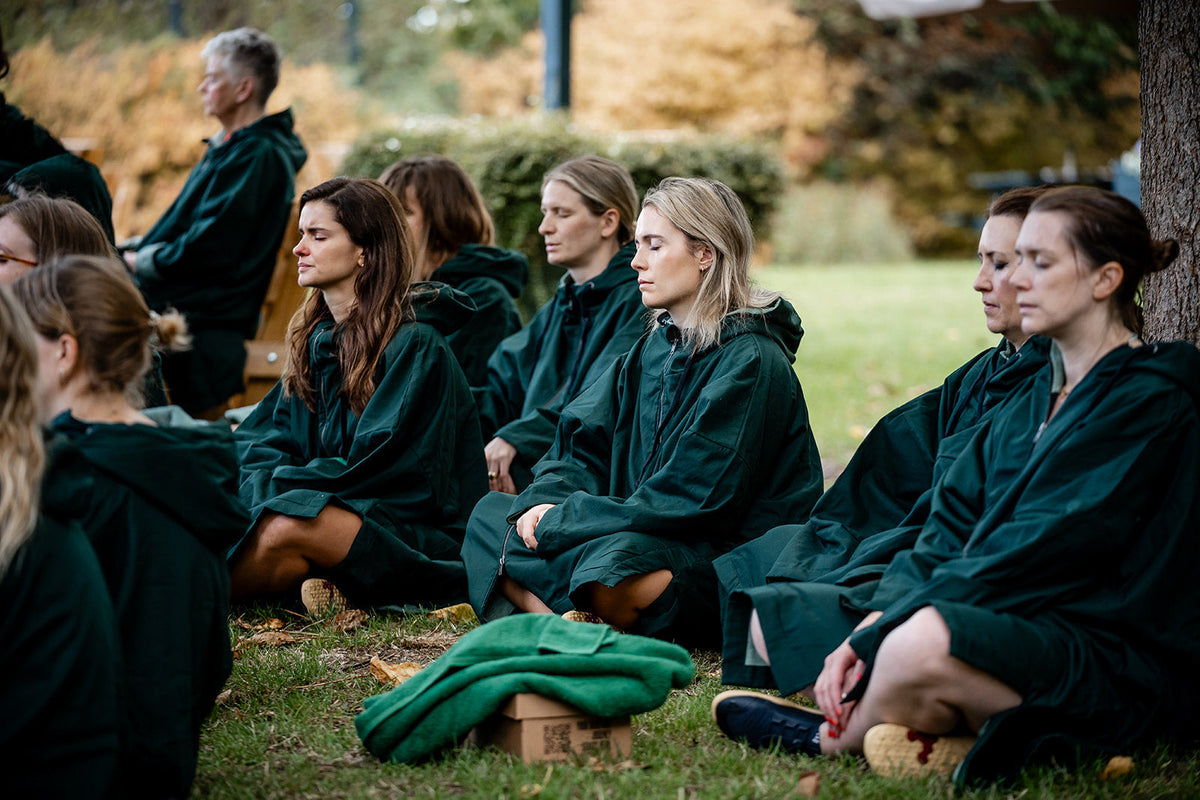
Feeling well is about more than any one product, meal or part of your health. What we put into our bodies matters, but so do the ways we move, rest, spend time outside and connect with the people and world around us.
These parts of everyday life are easy to overlook, particularly when modern life keeps us busy, indoors and permanently switched on. We can become so focused on doing more that we lose sight of some of the basic things that help us feel more like ourselves.
At Hunter & Gather, we bring these together as the Five Foundations of Living Well: Nourish, Restore, Move, Light and Connect. They shape our wider approach to health and wellbeing, grounded in what humans have always needed and made for the realities of life today.
What does it really mean to live well?
Health is often presented as something we can perfect if we find the right diet, follow the right routine or buy the right product. We do not believe it works like that.
Living well is much more connected. What we eat can shape how we feel, move and age, but it is not the only thing that matters. The quality of our rest, how regularly we move, the time we spend outdoors and whether we feel connected to other people all have a place in our wellbeing.
These parts of life do not exist separately, either. Rest can affect whether we feel ready to move. Time outside can create a moment of calm or connection. A shared meal can nourish us while bringing us closer to the people around the table. When one foundation is supported, it can make space for another.
That does not mean changing everything at once or creating a complicated new routine. It means understanding the foundations that support us, noticing which ones may have been crowded out and finding realistic ways to bring more of them into everyday life.
Inspired by the lessons of our shared past
Hunter & Gather has always been inspired by the wisdom of our shared past. Long before wellbeing became an industry, humans nourished themselves with real food, moved as part of daily life, lived more closely with natural light and relied on rest, nature and one another.
Modern life has brought plenty of progress, but it can also pull us away from some of those basic human needs. Food has become more processed and less recognisable. Many of us spend much of the day sitting indoors. Rest competes with constant stimulation, while being continually connected through a screen can leave little room for more meaningful forms of connection.
The answer is not to recreate the past or reject modern life. It is to recognise the lessons that still serve us, consider them alongside modern evidence and make them work for the way we live now.
The Five Foundations of Living Well are our way of bringing that thinking together. They are not another wellness routine or a set of rules to follow, but enduring principles that can help us eat better, feel better, look better and live more fully.
Nourish: Supporting your body with what it needs
What we put into our bodies shapes how we feel, move and age. For us, nourishment begins with real, recognisable and nutrient-rich ingredients, supported by evidence-backed nutrition where it has a useful part to play.
That sounds simple, but modern food does not always make it easy. Long ingredient lists and heavily processed products have become an ordinary part of life, which means understanding what we are eating can require more thought than it once did. Nourish invites us to come back to food that looks and feels like food, made from ingredients our bodies recognise.
It is not about restriction, complicated rules or eating perfectly. Nor does it ask us to divide every choice into good or bad. Nourishment can mean cooking with simple ingredients more often, choosing quality proteins and fats, adding something nutrient-rich to a meal you already enjoy or looking more closely at the foods you buy regularly.
It can also mean recognising that different people need different things. There is no single way of eating that works for every body, schedule or stage of life. The most useful choices are the ones that support your needs and can become part of how you already live.
Sometimes nourishment begins with one thoughtful change rather than an entirely new way of eating. The aim is not to control every mouthful, but to give your body more of what it needs in a way that feels enjoyable, practical and possible to continue.

Restore: Making space for rest and recovery
We live in a world that makes it easy to stay switched on. Work follows us home, screens fill the quieter spaces and rest can become something we postpone until everything else is finished.
But humans were not built to run at full speed all the time. Sleep, calm and recovery are foundational to living well, giving the body and mind time to restore before more is asked of them. When that time is repeatedly squeezed out, even the things we usually enjoy can begin to feel like more demands on our energy.
Restore is not only about the number of hours spent asleep. It is also about the quieter moments that help us step out of a constant state of doing. A proper pause during the day, a slower evening or a few minutes without another source of noise can all create space to settle.
What feels restorative will not be the same for everyone, and it may change from one day to the next. It might mean protecting the end of the evening from work, putting your phone down before bed, sitting quietly with a cup of tea or recognising when recovery would serve you better than pushing harder.
Rest does not need to be earned, and it does not always need a complicated routine around it. Sometimes it simply needs to be given a place alongside everything else that matters.

Move: Staying active in ways that work for you
The human body was built to move. Movement helps us remain strong and resilient throughout life, while creating a way to reconnect with our bodies after hours spent sitting, travelling or looking at screens.
Yet movement is often presented as something that only counts when it is planned, tracked or difficult. That can make it feel separate from everyday life, when it has always been a natural part of it.
Walking, stretching, carrying, gardening, swimming, dancing and structured training all have a place. Some movement challenges us, while some clears the mind or brings us back into the present. Both can matter.
The most useful form of movement is often the one that fits naturally enough into your life to happen again. It could mean walking part of a familiar journey, stretching between periods of sitting, choosing the stairs or making time for an activity you genuinely enjoy. On some days, it may be an energetic workout; on others, a steady walk may be what your body needs.
There is room for progress and ambitious goals, but movement does not need to be measured by exhaustion to have value. It is not another test to pass. It is one of the ways we continue using the bodies we ask so much of every day.

Light: Living more closely with nature’s rhythms
For most of human history, life was shaped by natural light. Daylight signalled activity, darkness encouraged rest and much more of everyday life took place outdoors.
Now, many of us begin the day inside, travel in enclosed spaces, work under artificial light and reach the evening having barely stepped outdoors. Time outside has become something we try to fit in, rather than a natural part of the day.
Light reminds us that sunlight, fresh air and nature’s rhythms belong within our wider view of health. It does not require hours in the countryside or an ideal morning routine. It can begin by noticing how much of the day has passed between four walls and opening the door.
Stepping outside in the morning, taking a daytime walk, moving a phone call outdoors or eating lunch outside when the weather allows can all bring natural light into the day. Time outside can also create space for other foundations, whether that means walking, pausing or sharing the moment with someone else.
The action may be simple, but that is precisely the point. Better health does not always begin with a dramatic change. Sometimes it begins by stepping outside and reconnecting with the world beyond the room you are in.

Connect: Strengthening our connection with people, nature and purpose
Humans thrive through connection: to other people, to nature, to community and to purpose. Yet a full life can still become a disconnected one when conversations are hurried, meals are eaten separately and our attention is continually drawn elsewhere.
Digital connection can keep us in touch, but it does not always leave us feeling close. Connect asks us to make room for the kinds of contact that bring us back into the moment: sharing food, listening properly, laughing together or spending time with someone without dividing our attention between them and a screen.
It can be as simple as calling someone rather than sending another message, inviting a friend on a walk or sitting down to eat together. These moments may look ordinary, but they are often the ones that help us feel most grounded.
Connection also reaches beyond our relationships with other people. Time in nature, contributing to a community and having something meaningful to work towards can all strengthen our sense of belonging. Feeling connected to a place, a purpose or something larger than ourselves can give shape to days that might otherwise feel consumed by tasks.
These are not optional extras around our wellbeing. They are some of its most human parts, and they deserve space alongside the things we more readily recognise as looking after our health.

How to make the Five Foundations part of real life without pursuing perfection
The Five Foundations are not five separate tasks to complete before the end of every day. They are principles to return to, and they often work together without us needing to plan them that way.
A walk outside with someone you care about can bring together Move, Light and Connect. Preparing a simple meal and sitting down to share it can become both Nourish and Connect. Choosing an earlier night after an active day allows Move and Restore to support one another.
This is why living well does not have to mean finding more time for five entirely new habits. It can mean looking at what is already part of your day and finding small ways to make those moments more nourishing, restorative, active, connected or open to the world outside.
There will be days when some foundations come easily and others barely feature at all. The point is not to practise each one perfectly. It is to notice what may have been crowded out and put a little of it back in when and where you can.
Start with what matters most to you now. If your days feel permanently switched on, that may be Restore. If you have spent a week moving between your home, car and workplace, it may be Light or Move. If life feels busy but strangely distant, it may be Connect.
Choose something small enough to fit into the life you already have, rather than waiting for the time or motivation to create an entirely new one. As that choice becomes more familiar, there may be room for another.
Conclusion: A more human way to live well
The Five Foundations of Living Well are not a new set of wellness rules. They bring us back to some of the most basic things humans have always needed: nourishment, restoration, movement, light and connection.
Together, they reflect what living well means to Hunter & Gather. It is a connected and accessible approach to health, inspired by the lessons of our shared past, informed by what we know today and made to work in real life.
You do not need to change everything to begin. Make room for one thing that helps you feel more like yourself, then let it become part of the way you live.
A little more of what humans have always needed. A little less of what modern life puts in the way. One way, every day, to let life back in.
What If Great Skin Isn't A Skincare Problem?