
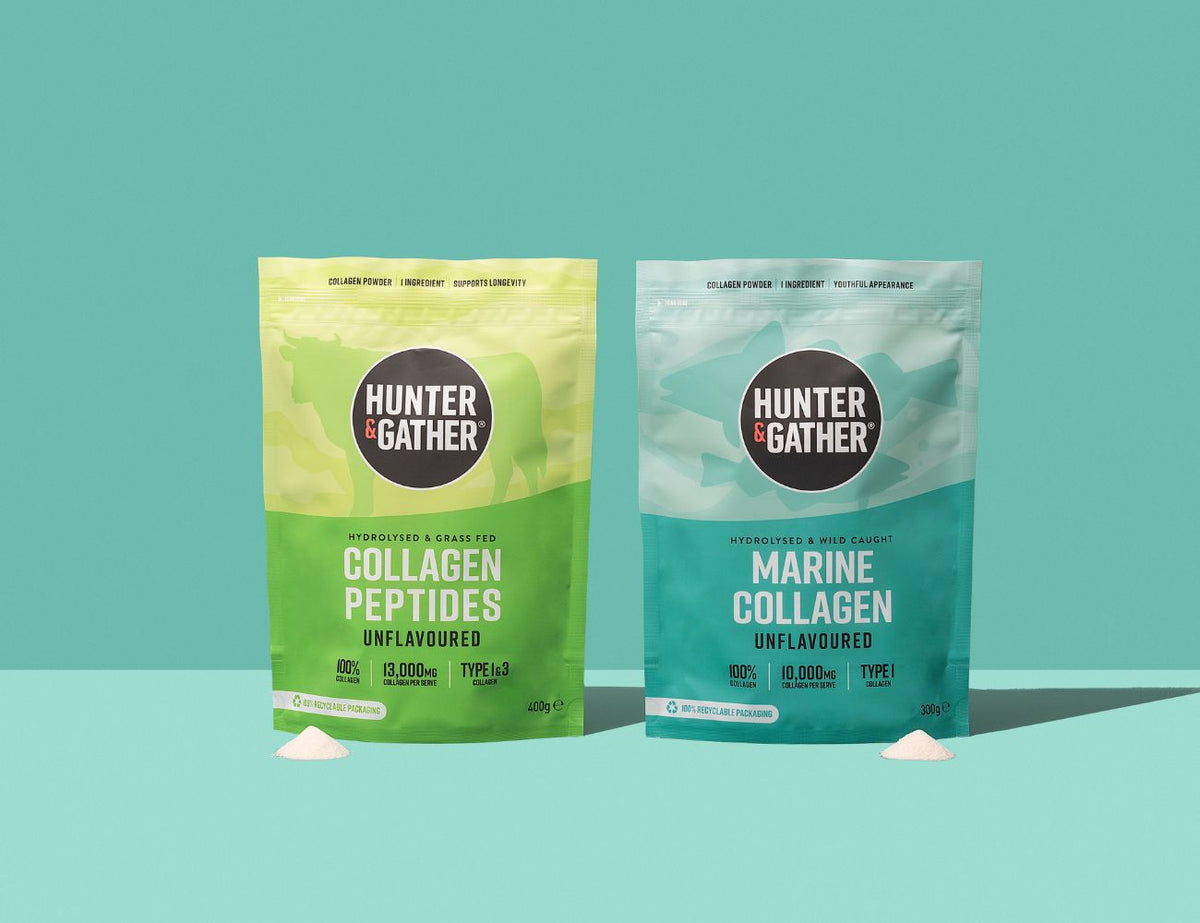
Choosing between marine collagen vs bovine collagen?
One promises glowing skin, the other stronger joints - but what's the real difference between bovine and marine collagen, and which type of collagen is actually better for YOUR health goals?
This guide breaks down everything from collagen types to the benefits of marine collagen versus bovine, so you can work out which collagen is right for your body.
Table of contents
- Key Differences Between Marine and Bovine Collagen
- What is Bovine Collagen? Benefits and Types (1 & 3)
- What is Marine Collagen? A Type 1 Collagen for Skin
- Is Marine Collagen Better Absorbed Than Bovine?
- Which Type of Collagen is Best for Your Goals?
- Amino Acid Profile: Marine vs Bovine Collagen
- Do Bovine or Marine Supplements Contain Type II Collagen?
- Sourcing and Safety: What to Look For in a Collagen Supplement
- Can You Take Marine and Bovine Collagen Together?
- How to Choose: A Simple Guide to Bovine vs Marine Collagen
- Does Vegan Collagen Exist? The Honest Truth
- Hunter & Gather Collagen: Quality You Can Trust
Key Differences Between Marine and Bovine Collagen
Here's the quick answer for anyone in a hurry:
| Feature | Bovine Collagen | Marine Collagen |
|---|---|---|
| Source of Collagen | Grass-fed cattle hides | Wild-caught fish skin & scales |
| Main Type of Collagen | Type 1 & Type 3 collagen | Primarily Type 1 collagen |
| Best For | All-around support: joints, gut, bones, skin | Beauty focus: skin elasticity, hair, nails |
| Serving Size | 13,000mg (2 tablespoons) | 10,000mg (2 tablespoons) |
| Absorption | Highly bioavailable hydrolysed collagen | Considered slightly more bioavailable |
| Key Benefits | Joint mobility, gut health, muscle support | Skin hydration, nail strength, hair health |
| Dietary Suitability | Not suitable for pescatarians | Pescatarian-friendly, often Kosher/Halal |
| Allergen Note | Good for those with fish allergies | Not suitable for fish/shellfish allergies |
| Cost | Generally more affordable | Usually more expensive |
| Sustainability | Grass-fed European cattle | Wild-caught MSC whitefish |
The short answer? Both are brilliant collagen supplements, but marine collagen and bovine collagen serve slightly different purposes. Bovine is your all-rounder, while marine is your beauty specialist.
Our Collagens
- Grass Fed Collagen Peptides Protein Powder
- Grass Fed Beef Bone Broth
- Wild-Caught Marine Collagen Peptides Protein Powder
- Bovine & Marine Collagen Powder Bundle
- Vanilla & Cacao Collagen Creamer Bundle
- Vanilla Bovine Collagen Creamer
- Cacao Bovine Collagen Creamer
- Rise & Glow Mixed Berry Marine Collagen
- Collagen Peptides Bovine Protein Sachets
- Marine Collagen Peptides Protein Sachets
- Rise & Glow Bundle
- Collagen MCT Power Pack
What is Bovine Collagen? Benefits and Types (1 & 3)
Bovine collagen is derived from the hides of grass-fed cattle and is a fantastic source of collagen that packs both Type 1 and Type 3 collagen. Think of it as the Swiss Army knife of collagen supplementation.

The Role of Type 1 & 3 Collagen
Here's where bovine collagen gets interesting.
Bovine collagen is rich in both Type 1 and Type 3 collagen, which work together brilliantly in your body:
Type 1 Collagen makes up about 90% of the collagen in the human body. It's the stuff that keeps your skin bouncy, your bones strong, and your tendons flexible. Think of it as your body's scaffolding - collagen is the most abundant protein in your body for good reason.
Type 3 Collagen works alongside Type 1, particularly in your organs, blood vessels, and muscles. It's the supporting actor that makes sure everything stays structured and flexible.
This combination means bovine collagen is particularly good for whole-body support. While marine collagen focuses mainly on beauty benefits, bovine collagen is working on your joints, gut lining, muscles, and skin all at once.
What is Marine Collagen? A Type 1 Collagen for Skin
Marine collagen comes from fish skin and scales. It's almost pure Type 1 collagen - the main structural protein in your skin. This concentrated source makes it particularly good for supporting skin bounce and hydration.
The smaller molecular structure of hydrolysed marine collagen peptides means your body often absorbs them quicker than bovine collagen. That's why many people notice skin improvements faster with marine collagen.

Why Type 1 is a Powerhouse for Beauty
Marine collagen is roughly 90% Type 1 collagen - the same type that makes up the majority of your skin's structure. This high concentration makes it particularly effective for improving skin elasticity and reducing fine lines.
While Type 1 collagen also supports bones, tendons, and gut lining, the concentrated dose in marine collagen makes it especially beneficial for skin and beauty concerns.
Is Marine Collagen Better Absorbed Than Bovine?
Here's where loads of marketing nonsense gets thrown around about marine collagen vs bovine collagen.
The Truth About "Smaller Peptides"
You'll often hear that marine collagen is absorbed better because it has smaller peptides. There's some truth to this - marine collagen peptides are naturally smaller, which can lead to faster absorption.
But here's the thing most companies won't tell you: the real game-changer isn't whether you take marine collagen or bovine collagen, it's how well the collagen is made through hydrolysis.
Why Hydrolysis is the Real Key to Bioavailability
Both our marine and bovine collagen undergo extensive hydrolysis - a process that breaks down large collagen molecules into tiny, easily absorbed collagen peptides. When done properly, this process can make bovine collagen peptides just as small and bioavailable as marine sources.
High-quality hydrolysed collagen (like ours) can have the same molecular weight and absorption rate regardless of whether the collagen is derived from cattle or fish. It's not about the cow versus the fish - it's about the science behind the processing.
The bottom line? Both our bovine and marine collagen are highly bioavailable. Choose based on your health goals, not marketing claims about which collagen is better absorbed.
Which Type of Collagen is Best for Your Goals?
This is where the rubber meets the road. Both different types of collagen are excellent, but they shine in different areas.
For Skin, Hair, and Nails

Marine collagen often gets the crown here, and the benefits of marine collagen for beauty are impressive. That concentrated Type 1 collagen is exactly what your skin uses to maintain elasticity and hydration.
But don't count bovine collagen out. With both Type 1 and Type 3, bovine collagen is also brilliant for comprehensive skin support. The Type 3 collagen helps maintain the deeper layers of your skin and supports blood vessels that keep your complexion healthy.
The verdict: Both work brilliantly for skin health. Marine collagen might give you faster results for surface-level improvements, while bovine provides deeper, structural support.
For Joints, Bones, and Gut Health
Bovine collagen takes the lead here. The mix of different collagen types makes it perfect for supporting various connective tissues in your joints, your gut's protective lining, and bone structure.
Type 3 collagen is particularly important for gut health. It helps keep your intestinal lining strong. If you're dealing with digestive issues or want to support your gut, bovine collagen is usually your best bet.
Marine collagen isn't useless here, though. It contains glycine and other amino acids that support joint health. But if joint comfort and gut health are your main concerns, bovine collagen covers more bases.
The bottom line: Bovine collagen wins for structural support, joint comfort, and gut health.

Amino Acid Profile: Marine vs Bovine Collagen
Both marine and bovine collagen are packed with the same key amino acids, just in slightly different amounts:
Glycine - The most abundant amino acid in collagen. Important for detoxification and sleep quality. Both sources give you plenty.
Proline - Needed for collagen production and skin health. Both deliver well.
Hydroxyproline - The unique amino acid that makes collagen what it is. Both types are loaded with it.
The differences are small. Marine collagen has slightly more glycine, while bovine collagen offers a more varied amino acid profile thanks to its Type 3 collagen content.
Our Bestsellers
- Classic Avocado Oil Mayonnaise (Keto Friendly)
- Grass Fed Organic Tallow
- Grass Fed Beef Bone Broth
- Vanilla Bovine Collagen Creamer
- Cacao Bovine Collagen Creamer
- Wild-Caught Marine Collagen Peptides Protein Powder
Do Bovine or Marine Supplements Contain Type II Collagen?
Here's something important to note: neither marine nor bovine collagen supplements provides Type II collagen. Type II collagen is found mainly in cartilage and is typically sourced from chicken collagen or eggshell membrane.
If you're specifically looking for Type II collagen for cartilage support, you'll need a different type of collagen supplement. But for overall health, skin support, and joint comfort, the Type 1 and Type 3 collagen found in marine and bovine sources are brilliant.

Sourcing and Safety: What to Look For in a Collagen Supplement
Let's talk about where your collagen actually comes from - because it matters loads.
Environmental Impact and Sustainability
Marine collagen gets points for sustainability when sourced properly. Our wild-caught whitefish collagen uses parts of the fish (skin and scales) that would otherwise be discarded. It's a classic example of nose-to-tail nutrition.
Bovine collagen can be a sustainable source of collagen too, but it depends on farming practices. Our grass-fed European cattle are raised on established pastures without contributing to deforestation. We specifically avoid South American sources that often involve clearing rainforest.
Safety and Dietary Considerations (Allergies, Kosher, Halal)
Marine collagen avoids concerns about BSE (mad cow disease) that historically affected some bovine products. But there's always the question of heavy metal contamination from polluted waters. That's why we third-party test every batch for heavy metals, toxins, and pesticides.
Bovine collagen from grass-fed, European sources is incredibly safe. These cattle are raised under strict regulations, and our products undergo rigorous testing for purity and safety.
Dietary and Religious Considerations
Marine collagen is the clear winner for pescatarians and often complies with Kosher and Halal dietary laws.
Bovine collagen is perfect for anyone with fish or shellfish allergies. It's also free from the top 14 allergens, making it suitable for most people with food sensitivities.
Can You Take Marine and Bovine Collagen Together?
Yes, it is not only safe but often recommended to take marine and bovine collagen together.
Combining different collagen sources provides a more comprehensive approach to collagen supplementation, allowing you to benefit from the unique properties and diverse health benefits each type offers.
Many of our customers take marine collagen and bovine collagen together, and it's one of the most common questions we get. They often report enhanced results across multiple areas - improved skin elasticity from the marine collagen alongside better joint comfort and gut health from the bovine collagen.
- Comprehensive collagen types - You get Type 1, Type 3, and an extra boost of Type 1
- Broader amino acid profile - The combined profile more closely mirrors human collagen composition
- Targeted support - Beauty benefits from marine, structural support from bovine
You can take collagen supplements at the same time or split them throughout the day - whatever works for your routine. Many customers have half a serving of each, or alternate between them.
Our Bovine & Marine Collagen Bundle makes this easy and cost-effective. You get both products at a better price, plus the convenience of having everything delivered together.
How to Combine Different Collagen Sources
Option 1: Take a full serving of each daily (2 tablespoons bovine + 2 tablespoons marine)
Option 2: Split the servings - 1 tablespoon of each daily
Option 3: Alternate days - bovine one day, marine the next
Start with smaller amounts if you're new to collagen supplementation (1 teaspoon of each) and build up over a week. Your gut will thank you.

How to Choose: A Simple Guide to Bovine vs Marine Collagen
Still not sure which collagen is right for you? Here's your cheat sheet:
Choose Bovine Collagen if:
- You want comprehensive, whole-body support
- Joint comfort and mobility are priorities
- You're focused on gut health and digestion
- You have fish or shellfish allergies
- You want the most bang for your buck
Choose Marine Collagen if:
- Skin, hair, and nail health are your main goals
- You're pescatarian or follow Kosher/Halal diets
- You want faster absorption for beauty benefits
- You're specifically targeting signs of ageing
Choose Both if:
- You want comprehensive support across all areas
- You're serious about your health and wellness routine
- You want to maximise the benefits from different types of collagen
Does Vegan Collagen Exist? The Honest Truth
Here's the thing about vegan collagen - it doesn't actually exist. Collagen is a protein found in animals, so true collagen is always animal-derived. What you'll find marketed as "vegan collagen" are usually plant-based supplements containing amino acids that support your body's natural collagen production.
These can be helpful for supporting collagen levels, but they work differently from taking actual collagen peptides. If you're vegan, these collagen-supporting supplements might be worth exploring, but they're not the same as marine or bovine collagen.
Hunter & Gather Collagen: Quality You Can Trust
Where Our Marine & Bovine Collagen Comes From
Our bovine collagen peptides come from the hides of grass-fed European cattle. These cattle roam lush pastures, living their best life before becoming your daily dose of health-optimising nutrition.
Our marine collagen comes from sustainably wild-caught whitefish swimming in the North Atlantic, Norwegian, and Barents seas. These fish live in clean, cold waters, giving you a purer collagen source.
The extraction process uses gentle hydrolysis to break down the collagen into easily absorbed collagen peptides.
No harsh chemicals, no shortcuts - just science working the way it should.
All our collagen products are:
- Third-party tested for heavy metals, toxins, mycotoxins, and pesticides
- Single ingredient - no fillers, bulkers, or artificial additives
- Sustainably sourced from grass-fed European cattle or wild-caught MSC whitefish
- Hydrolysed for maximum absorption
- Keto, Paleo, and gluten-free
Whether you choose our award-winning Bovine Collagen, Marine Collagen, or the Bovine & Marine Bundle, you're getting premium quality that delivers real results.
Products Featured In This Blog
- Grass Fed Collagen Peptides Protein Powder
- Grass Fed Beef Bone Broth
- Wild-Caught Marine Collagen Peptides Protein Powder
- Bovine & Marine Collagen Powder Bundle
- Vanilla & Cacao Collagen Creamer Bundle
- Vanilla Bovine Collagen Creamer
- Cacao Bovine Collagen Creamer
- Rise & Glow Mixed Berry Marine Collagen
- Collagen Peptides Bovine Protein Sachets
- Marine Collagen Peptides Protein Sachets
- Rise & Glow Bundle
- Collagen MCT Power Pack
FAQ
What's the main difference between bovine and marine collagen?
The key difference is the source. Bovine collagen comes from grass-fed cattle, while marine collagen is derived from fish skin and scales. Both provide similar types of collagen protein, but they vary slightly in amino acid profile and how easily they blend into drinks or recipes.
Which type of collagen is absorbed better, bovine or marine?
Both bovine and marine collagens are hydrolysed into small peptides, meaning they're broken down for easy absorption. Some people find marine collagen mixes more smoothly or suits lighter drinks, while bovine collagen offers a more neutral, creamy texture, ideal for coffee or smoothies.
Is marine collagen more sustainable than bovine collagen?
Marine collagen often uses parts of the fish that would otherwise go to waste, making it a by-product of the fishing industry. Bovine collagen, on the other hand, supports nose-to-tail use of grass-fed cattle. Both can be considered sustainable when responsibly sourced.
Can I take both bovine and marine collagen together?
Yes, combining them can give you a broader amino acid profile and flexibility in how you use them. Many people mix or alternate the two depending on flavour preference or routine, such as marine in morning smoothies and bovine in hot drinks.
Which collagen type is best for me?
It depends on your lifestyle and preferences. If you avoid bovine products or prefer something lighter in taste, marine collagen is a great choice. If you value a neutral flavour, slightly higher protein yield and grass-fed sourcing, bovine collagen may suit you better.
Related Reading

Can collagen help with the menopause?
Will Collagen Break My Intermittent Fast?
Morning Routines: From Collagen Coffee to Smoothie Bowls
All information provided on our website and within our articles is simply information, opinion, anecdotal thoughts and experiences to provide you with the tools to thrive.
It is not intended to treat or diagnose symptoms and is definitely not intended to be misconstrued for medical advice. We always advise you seek the advice of a trained professional when implementing any changes to your lifestyle and dietary habits.
We do however recommend seeking the services of a trained professional who questions the conventional wisdom to enable you to become the best version of yourself.
Will Collagen Break My Intermittent Fast?
What Are Electrolytes and Why You Need Them Daily