
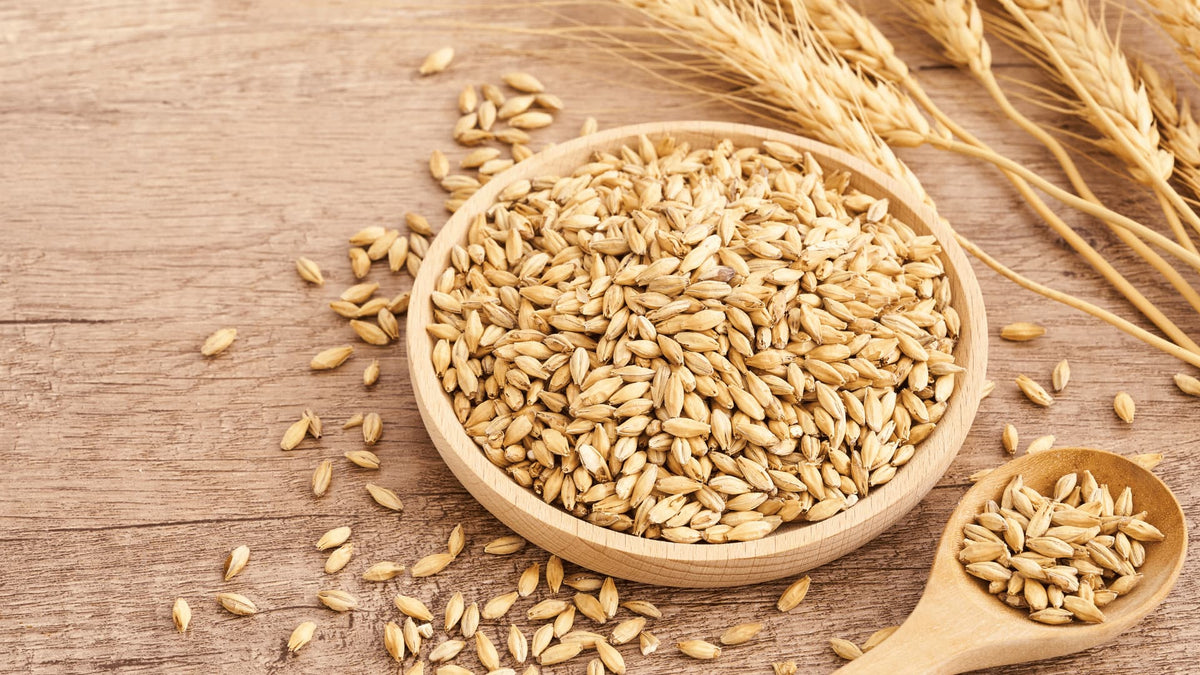
There are so many disadvantages to eating whole grains it’s a wonder why we started eating them in the first place.
"Study of human skeletal remains from archaeological contexts shows that the introduction of grains and other cultigens, and the increase in their dietary focus, resulted in a decline in health and alterations in activity and lifestyle. [...] This change in diet and acquisition of food led to a decline in quality of life for most human populations in the last 10,000 years."
- Clark Spencer Larson, Anthropologist, Ohio State University
Executive Summary
- Why we started eating grains and why they became such an important staple food is a mystery because they are not the most nutritious or easy-to-farm plants.
- Grains have been in the human diet for over 105,000 years.
- We’ve used them to make alcohol for at least 13,000 years.
- As city-states formed, taxes needed to be raised. Grains became currency.
- Archaeological data shows that when humans became farmers their health and height suffered mainly because of nutrient deficiencies.
- Grains are full of anti-nutrients that block the uptake of the nutrients within.
- Simple processes evolved to reduce these anti-nutrients.
- Modern processing typically skips these processes, leaving whole grains high in anti-nutrients.
- Modern cross-pollination of grains has reduced the nutrient content and increased toxic elements from pollution.
- Glyphosate, the world’s most popular farming chemical kills healthy human gut flora.
- Chemical cocktails exist within most grains. Their accumulative effects are unknown and understudied.
- Farming chemical usage grows every year.
- Most farming chemicals are used on grains.
- Farming chemicals are linked to a host of diseases of modernity, including dementia, CVD and cancer.
- 107 farming chemicals have been measured accumulating in children.
- Grains are susceptible to fungal infections, the mycotoxins from which are poisonous.
- Gluten causes and or worsens certain autoimmune conditions.
- There is evidence of serious psychosis being caused by a reaction to gluten. The removal of gluten stopped the psychosis.
- Other diseases made worse or caused by gluten include IBD, depression, skin conditions, asthma, IBS and autoimmune conditions.
- Grains are not as nutritious as we’re told because of the poor bioavailability of their nutrients.
- Bioavailability cannot be taken into account, but research generally shows micronutrients are very poorly absorbed from whole grains and other plants, especially in combination.
- Nutrients in grains are exaggerated by our most prestigious dietary institutions.
- They are only rich in carbohydrates and fibre.
- The protein in grains is not complete. It’s classified as a poor-quality protein.
- Dietary institutions use observational research only for their support of whole grains.
- Observational research does not allow such confidence. It is weak by nature and riddled with bias.
- Most people still choose refined grains.
- 57% of the British diet is junk food. 40% of junk foods are made from grains.
- Observational research shows associations between many positive health outcomes and eating whole grains.
- These associations are generally not supported by intervention trials which are much more powerful.
- Whole grains are high in fibre.
- It’s possible to eat too much fibre, worsening constipation and nutrient deficiencies.
- There is plenty of fibre in green leafy vegetables or other plants.
- One of the world’s most senior epidemiologists, Dr John Ioannidis, is highly critical of nutrition research, especially observational studies. He calls for an overhaul to stop all of the confusion which seems only to infect humans when it comes to knowing what to eat.
Introduction
The world’s leading nutrition experts, from universities to government panels and everything in between, extols the virtues of whole grains, even adding the prefix ‘healthy’. Grains have been a part of the human diverse diet for at least 105,000 years. We’ve been making alcohol from them for at least 13,000 years, at least 3000 years before their domestication.
Something about grains has pulled us in, intertwining our fates, but why? There are so many plants that are more nutritious, and easier to farm and protect than grains, it’s hard to understand why they have become such a large fraction of our diets. Our infatuation with grains may have been rooted in addiction before being used as a tool to build city-states, a system in which we live today. Grains were the first currency. They became an easily taxable product, predictable in every way and harvested at the same time each year. Fields of wheat cannot be hidden from tax inspectors like tubers resting underground until needed, just an hour or two before consumption. Grains need a lot of processing to give up their nutrients and, even then, are not well absorbed, despite what we’re told. Every year the world uses more farming chemicals than the year before.
Pollution, additional chemicals and cross-pollination all contribute to the decline in the quality of grains. These chemicals, both natural and synthetic, are being linked with diseases including dementia, cardiovascular disease and cancer—the big three. Other conditions include autoimmune illnesses and mental health problems from anxiety to psychosis. Our most prestigious dietary institutions use only weak observational papers to support their claims that whole grains are healthy. Interventional trials only compare whole grains to refined grains, and the findings generally do not support the observational research.
Another huge issue is the truth about bioavailability, which is much worse than we’re led to believe. However, research into this existential problem is not forthcoming. Could it be that such research would shame the current advice to ‘base our meals around healthy whole grains and other starchy carbohydrates?’
Nutrition research needs overhauling.
Why did humans start eating grains?
Why did humans start eating grains?
After all, they’re not the most nutritious of plants; their cultivation requires back-breaking labour, and they pin people to one location, come what may. They’re vulnerable to weather changes, blights, and good old-fashioned adversaries who can destroy crops for as far as the eye can see as easily as light a candle. Grains have inbuilt toxins, they can develop other lethal ones at any stage of their cultivation, processing and storage and, nowadays, are drenched in farming chemicals sometimes for no other reason than to dry them out just before harvesting. Besides toxic agents, grains contain a lot of energy, poor-quality protein, hard-to-access nutrients, and inflammatory triggers that can ruin lives.
But despite these unassailable truths, grains have been a part of the human diet for at least ten times longer than dairy. Every conventional dietary institution sings the same song. Eat whole grains for a healthy, long life, they tell us. Base your meals around whole grains because they’re a ‘complete package’ brimming with nutrients and righteousness.
But are whole grains a healthy food? When and why did humans begin eating them? Why did they become a staple food, and what is the evidence to buttress such wholesale support from academics, industry and government alike?
Let’s start at the beginning.
Grain basics

Grains are the seeds of various types of grasses known as cereals. We’ll divide them into two groups: gluten (specifically gliadin) containing cereals, including wheat (all types), rye, and barley. And naturally gluten-free ones, including rice, corn, oats and buckwheat. The most popular grains in the world are rice, wheat, corn (maise), oats, barley and rye. In the UK, wheat is our favourite.
Each grain is called a kernel, which comprises three major parts:
- Bran: This is the most fibrous part and contains most of the micronutrients.
- Germ: This is the reproductive part, which sprouts into a new plant. It also contains vitamins and fats.
- Endosperm: Contains mainly carbohydrates as starch.
Modern grain refining leaves only the endosperm high in energy with few of the original nutrients. No one is arguing that unfortified refined grains are a healthy food, so our major focus in this article will be on whole grains.
The precise definition of whole grains has remained murky.
Generally speaking, whole grains contain the whole kernel, including the bran, germ, and endosperm, making them more nutritious than the refined, unfortified version.
The history of grains in the human diet
In some circles, the Paleo Diet community, for example, grains are considered a very recent addition to the human diet within about 10,000 years.
Therefore, they believe we haven’t adapted to digest them, and so they cause inflammatory issues. [2] Whilst there is truth to this, humans have used simple processes to make grains edible—discussed later. But, whether being edible qualifies them as a deserved nutritious staple food or something people chose for other reasons, is yet to be discerned. We’ll look back at the evidence of grains in the human diet to see if it gives us any clues as to why they have become such indispensable crops.
The earliest known evidence for grain consumption dates back to 105,000 years Before Common Era (BCE). [3]
Archaeologists working in a cave site in Mozambique found starchy residues on stone tools with which Middle Stone Age people used to grind wild sorghum, a naturally gluten-free cereal. For the first evidence of bread making, we have to jump over 90,000 years to about 12,000 BCE.[4] A meticulous archaeologist discovered the world’s oldest breadcrumbs by examining the remains of an ancient fireplace.[5]
A much smaller leap through time carries us to about 11,000 BCE when researchers discovered evidence for the storage of wild grains in modern-day Jordan, on the Dead Sea coast.[6]
So, people have been eating grains for tens of millennia, but why?
Why choose grains?
According to archaeological research, there is no evidence of true domestication of grains and other plants before the Younger Dryas period (12,900 to 11,700 years BCE).[7]
The Younger Dryas period was a sudden drop in global temperature at the end of the last major ice age. After this, the world’s temperature became milder, arguably making life easier for our ancestors but bringing other challenges. Unable to adapt, many of the large, fatty mammals known as megafauna, on which our ancestors had almost exclusively existed, vanished.[8] Humans, the most adaptable species ever to walk the earth, had to live up to that claim and change along with our environment or risk going the way of the woolly mammoth.
Our diets had to change.
Humans were forced to incorporate a wide range of plants, including grains and animals, which were much leaner than the megafauna. Some areas were easier to exist in than others. Inside an area known as the Fertile Crescent (within the Middle East), three great rivers, the Nile, Tigris and Euphrates, flooded annually carrying vast amounts of nutrients from mountain ranges to river deltas, dumping them into soil.[9]
These areas exploded with life.
Humans built little settlements on mounds to protect them from the flood waters and gave them access to the rich soils and abundant flora and fauna, some of which would literally come to their doors.[10] Humans in these lush areas became settled but, due to a lack of necessity, didn’t domesticate anything until, as the theory goes, ecological pressures shifted, and they began to manage their surroundings to a greater extent. This wasn’t done in a generation or two but over hundreds. People had gradually started domesticating plants and animals, in what we would recognise today as small-scale farming. But it is a mystery why they decided on grains over other foods that offer easier cultivation, less processing to make edible, more nutrients and more energy per KG.
13,000 years ago, before domestication, people were storing and fermenting wild grains to make alcohol for rituals and feasts.[11] Since then, alcohol has been central to human culture; some even believe it helped fuel the development of arts, languages and religion.[12]
James Scott, PhD, Professor of Anthropology at Yale University, forwards a compelling argument in his book Against the Grain: A Deep History of the Earliest States.[13] As people settled in these lush areas, populations increased far beyond hunter-gatherer communities, and collections of grass huts multiplied to become villages, towns, and eventually city-states. States need governance, which the local population must pay for with taxes. Grains, specifically barley, became the first recorded currency.[14] Tax collectors could assess ahead of time, recording the information on clay tablets; writing was born.[15] Harvests were predictable, unlike other potential crops, which could grow and stay underground, all but hidden, waiting to be dug up and eaten within an hour or two. Scott argues that grains enslaved us to these city-states.
A bondage in which we remain.
Brutal farming
Before modern state formation, it’s important to realise that people went back and forth for millennia along a continuum with nomadic hunting and gathering at one end and settled farming at the other, dependent on the existential ecological pressures in which they found themselves.[16]
It’s easy to believe that swapping hunting and gathering for farming represented a step up the civilisation ladder, each leading us out of that hard life and into an easier one to the wonders of today. The trouble with that theory is that being a farmer is much tougher than being a hunter-gatherer. For starters, crops are vulnerable to attack by weeds and pests. In Ancient Sumeria, about 6000 years ago, farmers used a sulphur compound as a pesticide.[17]
Compared to farmers, hunter-gatherers spend a fraction of their time working.
In just 17 hours a week, the Ju/’hoansi bushmen in Africa were able to hunt and gather an average of 2,300 calories worth of protein-rich, nutritious wild food.[18] In his essay The Worst Mistake in the History of the Human Race, Jared Diamond shares insights from the Hadza nomadic hunter-gatherers and Kalahari bushmen, some of the last hunter-gatherer tribes in existence.[19]
Diamond says these bushmen gather all their necessary sustenance in about fifteen hours a week. The Professor of Geography notes that the bushmen enjoy ample sleep and plenty of leisure time, and they expressed no desire to emulate their more labour-intensive farmer neighbours.
Hunting and gathering is healthier than farming.
Comparison studies of early farmers and ancient hunter-gatherer societies in the exact locations but separated by millennia provide excellent insights into how farming affected their health. Compared to the hunter-gatherers living 6,500 years earlier, the farmers lived much shorter lifespans with increased rates of infant mortality and greater prevalence of iron deficiency anaemia.[20] Enduring 50% more tooth infections and spinal deformities from the repetitive nature of farming, these ‘more advanced’ settled people suffered from infectious diseases as a result of poor animal husbandry and malnutrition.[21]
The farmers were also shorter than their ancient forebears.
Human height took a hit
About 16,000 years ago, the average height of males in Europe was 5 feet 9 inches, and the average height of women was 5 feet 2 inches.
As groups of people transitioned into farmers, their average height plummeted to 5 feet, 3 inches for men and 5 feet for women.[22] Until recently—because height is directly related to the amount and quality of protein we and our mothers consume—[23]our average height has recovered in Europe.[24] However, in low-income countries where animal foods are expensive and rare—replaced in large part by grains—their average height has decreased.[25] This trend seems to be infectious, spreading into the United States, where the average height is beginning to shrivel in low socio-economic groups. These groups struggle to nourish themselves because grain-based junk foods are cheap, convenient and ubiquitous, whilst whole foods, including animal produce, are much more expensive.[26] Will the UK and Europe follow the US’s lead and begin to shrink?
We’ll have to wait and see.
Farming brought with it back-breaking labour, disease, dysfunction, reduced stature and, for better or worse, sedentism and, eventually, state formation. At the heart of farming was grain cultivation. Why our ancestors chose grains above easier-to-farm and nutritious crops will remain a mystery, and it doesn’t matter for our purposes. We know that grains have been a part of the human diet since well before the advent of farming and domestication, and we know that our health has suffered because of it.
We also know that grains contain anti-nutrients, which can explain, in part, why our health and stature continue to suffer.
Anti-nutrients in grains
Anti-nutrients are chemical compounds within plants.
They protect the plant from pathogens and other threats to their survival.[27]
Grains, like seeds within fruits, use these chemical defences to safely deliver at least a fraction of themselves through some animal’s digestive tract before being deposited in a steaming pile of fertiliser somewhere distant from the parent plant. Anti-nutrients also prevent nibbling herbivores from eating the entire plant, chemically encouraging them to move on to something else.
Phytic Acid (Phytate):
Phytic acid is one of the most common anti-nutrients found primarily in whole wheat, barley, rice and corn.[28]
We can’t digest it because we lack the enzyme phytase to break it down.[29] Phytic acid ‘strongly binds’ to minerals, including iron, zinc, magnesium, and calcium, inside our digestive tracts and reduces their absorption.[30] Iron and zinc deficiencies are endemic in developing countries, affecting a third of the world’s population. Eating grains without deactivating the phytic acid worsens these deficiencies. Researchers in the journal Science suggest avoiding eating unprocessed grains with main meals to prevent phytic acid from blocking mineral absorption.[31]
In 1979, researchers studied to what extent phytic acid could block zinc uptake in a meal.[32] They tested oysters, rich in zinc, with black beans and oysters with corn tortillas, which were middling and high in phytic acid, respectively. The results were surprising.

The more phytic acid in the meal, the more zinc uptake was blocked. (Soloman et al, 1979)
The corn tortillas blocked almost all of the available zinc from the oysters. Indeed, three hours after eating, as you can see by the lowest line on the chart above, the tortillas managed to sink zinc levels below baseline, i.e. beneath the starting level of zinc. In other words, the phytic acid in corn removed more zinc from the body than the oysters added.
The meal of oysters and black beans, lower in phytic acid, correspondingly blocked less zinc. Interestingly, the corn used to make the tortillas was lime-soaked, which should have deactivated the phytic acid.
Lectins
Lectins are resistant to human digestion and, like phytic acid, can block the absorption of nutrients.
Whole grains are a concentrated source of lectins. They can trigger different parts of the immune system and, in some people, worsen their autoimmunity.[33] In animal models, they worsen intestinal inflammation and permeability (known as ‘leaky gut’) as well as activating the immune system and increasing the likelihood of food allergies and intolerances.[34] These negative changes in the gut compromise the absorption of vitamin B12, important fats including the fat-soluble vitamins (A, D, E, and K) and proteins, potentially stunting growth.[35]
Oxalates
Oxalates, including oxalic acid, bind to minerals, including sodium, potassium, calcium, iron, and magnesium and reduce their absorption.[36]
The miniature glass-like shards are in grains and other fruits and vegetables in varying amounts. Animal livers, including humans, contain some because they’re produced as a natural part of metabolism. Oxalates defend the plant from soil pollution.[37] A healthy gut flora should break down a reasonable level of oxalates without causing symptoms.[38] But, small amounts of oxalates are absorbed through the intestine and colon.[39] Together with gut dysfunction, which is common, or when excessive amounts are consumed—think green smoothies with almond ‘milk’ and whole grain toast for breakfast every day—they contribute to 80% of our kidney stones.[40]
Buckwheat, a gluten-free grain, is probably the highest oxalic acid-containing grain.[41]
Gluten
Whilst not a true anti-nutrient, gluten, found in wheat, barley, rye, and other grains, is a protein that can cause problems for individuals with coeliac disease (an autoimmune disease) or non-coeliac gluten sensitivity, leading to inflammation and intestinal damage; discussed later. Gluten is not completely broken down in the human gut; these partially broken down proteins, called peptides, can cause myriad symptoms. Total levels of gluten found in heirloom grain varieties—often termed ‘ancient’—including einkorn, emmer, and spelt are typically about the same as in modern versions of wheat.[42]
However, the type of gluten in modern varieties is different, lending itself to a lighter, more bubbly bread, which is a hit with consumers but may be harder to digest.[43]
One such peptide, gliadorphine, can be problematic for totally different reasons.
Gliadorphine—from the words gliadin (the problematic protein inside gluten) and ‘orphine’ from the word morphine—is a peptide that attaches to opiate receptors in the gut, which then create opioid-like compounds[44] which travel to the brain mimicking the effect, albeit less intense, of opioid drugs including morphine, street name heroin.[45] When trying to remove gliadin-containing grains, including wheat, rye, barley, and products made with them, people can experience signs of withdrawal.
This makes people resistant to removing gluten-containing grains.
Other anti-nutrients in grains worth covering
Tannins can bind to nutrients, including iron and proteins forming substances that can cause digestive distress and nutrient deficiencies if not made up elsewhere in the diet.[46]
Providers of food aid considering anti-nutrient deactivation for their charitable donations.[47] Given that iron is the single most prevalent nutrient deficiency in the world and billions of people fail to get enough protein, anything blocking these critical nutrients is a major concern.[48] Healthy people with robust gut flora should be able to break down tannins without an issue.[49]
Starving people don’t have healthy gut floras.[50]
Protease inhibitors are compounds found in grains and other foods that interfere with our ability to use the enzyme protease to break down and absorb proteins.[51]
Plants use protease inhibitors as a defence against pests and microbial infections by interfering with their miniature digestive abilities.
Traditional processes can reduce or deactivate many of these plant chemicals.

Niacin deficiency (vitamin B3) can kill.
Traditional processing of grains
In 1493, a year after Christopher Columbus ‘discovered’ America, corn found its way into Europe as part of what would later become known as the Columbian Exchange.[52] After years of hybridization—the process of cross-pollinating plants to improve certain characteristics for human usage—corn became a staple crop in Europe where it proved hardier than many native grains.
But, what failed to arrive with it was the knowledge of how to absorb the nutrients within.
Soaking
In Europe, as corn took off in popularity, a disease began ripping through villages and towns like some pernicious plague.[53]
The niacin deficiency (vitamin B3) disease is known as Pellagra, which is characterised by the four ‘Ds’: dermatitis, diarrhoea, dementia, and death. What Central American cultures had learned from experience was skipped by the Europeans; corn needs soaking in lime water, a process called nixtamalisation, which unlocks the nutrients within.[54] It wasn’t until the 20th century that scientists discovered the cause of pellagra and the simple remedies of appropriate food preparation and or a diverse diet, including animal produce, which contains bioavailable niacin nixtamalisation not required.[55] Today, pellagra is rare except where food aid is distributed, and people exist on nothing but one or two types of grain for months at a time.[56]
Sprouting
If soaking in water or another solution isn’t enough to disarm the anti-nutrients, the next step is to sprout the grain.
Sprouting is when the kernel's germ begins turning into the next generation of plants. Water acts as a chemical signal to the kernel, which begins breakin
In Defence of Dairy
A Saturated Fact: Beef Tallow is Healthy