
If you’ve recently started a keto diet, knowing which foods are keto-friendly and which aren’t can be challenging. It can almost feel like learning a whole new language.
Since you’ve found your way to this article, chances are you’re wondering if dates are keto or not.
That’s a great question. After all, dates are a type of fruit and some fruits are allowed in moderation on the keto diet. Maybe you’ve even seen a blogger include dates as a sweetener in a keto or low-carb recipe.
We’re here to clear up the confusion. In this article, we’ll be discussing whether or not this ooey-gooey fruit is suitable for a keto diet, along with sharing other helpful information to support you on your quest for optimal health.
What Is the Keto Diet?
First of all, let’s cover some keto basics for those who aren’t familiar with this diet. The keto diet (short for ketogenic diet) is a high-fat, low-carb way of eating in which you consume about 60 percent of your daily calories from fat, 30 percent from protein, and 10 percent from carbohydrates (carbs). Yes, that means goodbye conventional grains based bread, potato chips, rice, and sugar laden baked goods!
By consuming less than 50 grams of carbs a day (or as low as 20 grams for some), as suggested on a keto diet, the body shifts from burning carbs (its typical fuel source) to burning fat. When the body enters this fat-burning state (called ketosis), it produces molecules called ketones. (Ketones are an alternative fuel made by the liver when there isn’t enough glucose (sugar) to be used as energy.)
As the name suggests, ketosis is the target state of the keto diet, and the way to enter that state is by drastically limiting the number of carbs and sugar you consume.
What are Dates?
Dates are a tropical stone fruit which come from the date palm tree (phoenix dactylifera).
The date palm tree is native to North Africa, the Middle East and South Asia - where its sweet, edible fruits have been enjoyed for thousands of years.
Dates grow in large clusters, similar to a bunch of grapes - but they're much bigger than grapes, averaging from around 3-7cm in length.
Their naturally high sugar content (60-70%) means that they are used in both sweet and savoury dishes, as well as simply being eaten as a fruit.
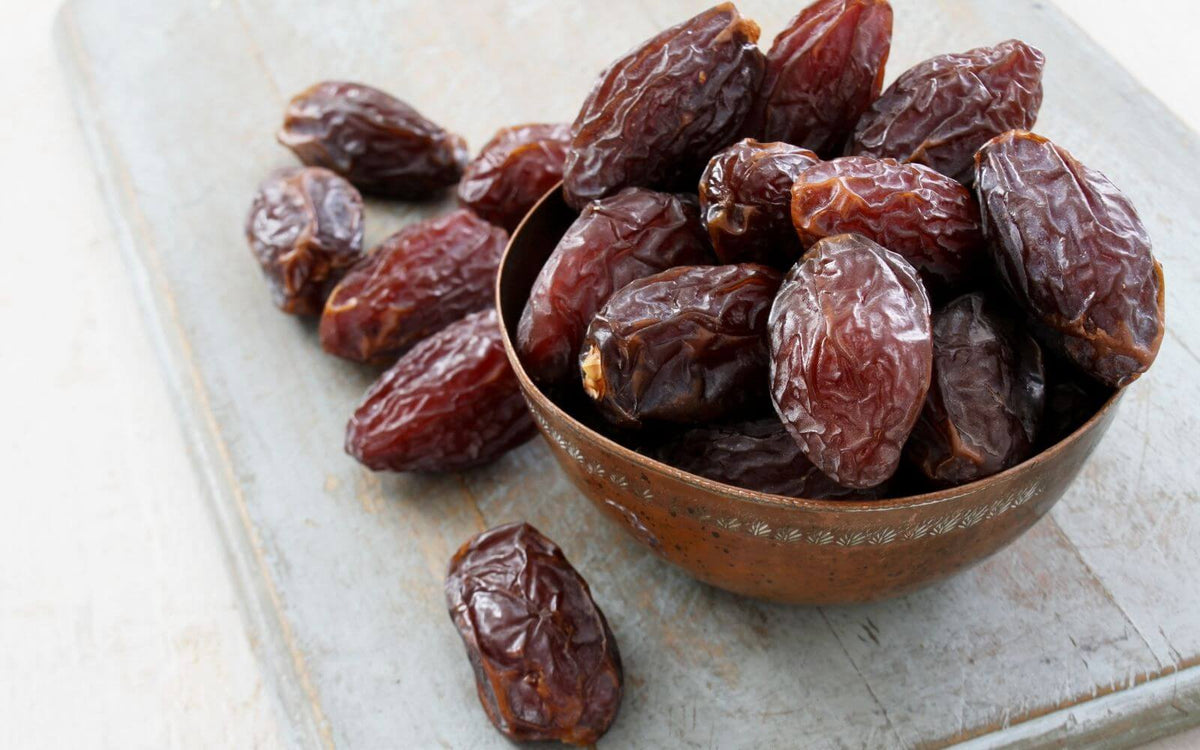
There are many different varieties of dates, but perhaps the most well-known is the Medjool date. Medjool dates are very large, usually softer than other dates and are caramel-like in flavour.
In modern times dates are commonly used as a natural alternative to refined sugar and sweeteners.
The Different Forms of Dates
When dates are ripe they are harvested either by hand or with the help of a machine. They contain a stone which is either left in or pitted, then the dates are enjoyed in a number of different ways.
Fresh & Unprocessed
Despite what their wrinkled appearance may lead you to believe, not all dates are completely dried.
They actually develop their brown, dehydrated skin and sticky texture as they ripen on the tree - and can be eaten fresh, as well as dried.
Fresh dates are naturally lower in sugar and are far less wrinkled and sticky. However, once picked they perish very quickly and so fresh dates are usually only available to enjoy in the country they are grown in.
Dried & Dehydrated
The most common form of dates are the partially dehydrated fruit you'll find in the dried fruit section of the supermarket - often savoured around Christmas time in the UK as a more exotic purchase.
Dates are dehydrated and dried both naturally via the sun and artificially within the food industry, to remove moisture and create a denser, stickier, sweeter fruit.
Like all dried fruit, the drying process results in a much higher, more concentrated source of sugar.
Date Syrup
Date syrup can be made by heating dates in water, blending and separating out the insoluble parts of the dates. The resultant liquid is evaporated until it becomes a lot thicker and stickier, with a similar consistency to honey.
Like maple syrup and agave nectar, date syrup is a popular plant-based alternative to honey for vegan and vegetarian diets.
Date Powder & Pastes
Date powder is made with fully dried, pitted dates which are ground and sieved to produce a powder.
The powder is sweet and very fine in texture, making it a great natural alternative to sugar for using in baking. It is also a popular choice in smoothies, to provide sweetness without the use of artificial sweeteners.
Date paste is made either by reintroducing liquid to date powder, or by cooking fresh or dried dates down in hot water before blending in a food processor. Again, date paste is a popular natural alternative to sugar in both sweet and savoury recipes.
Nutritional Profile of Dates
The nutritional profile of dates will vary depending on their variety (as mentioned above).
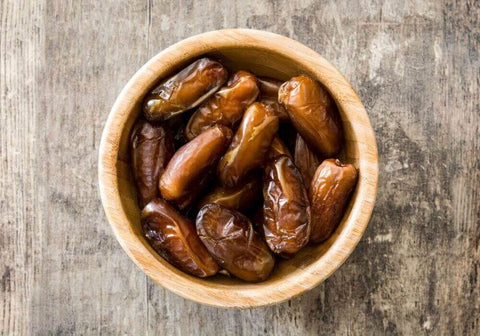
The typical nutritional value of the most common variety of dates (partially dried) is below.
Date nutrition per 100g
Calories: 282
Fat: 0.4g
Of which saturates: 0.0g
Carbohydrate: 75g
Of which sugar: 63g
Protein: 2.5g
Fibre: 8g
Dates are naturally very high in sugar, with this amount only rising the more they are dried and dehydrated. They are not a good source of protein or fat, but are a great source of fibre. Most people will be surprised to know that per gram dates have more total sugars than many chocolate bars!
Aside from macronutrients, dates contain many beneficial micronutrients including potassium, magnesium, copper, manganese and Vitamins A, B6 & K.
Are Dates Keto-Friendly?
No, dates are not keto-friendly. Dates are high-carb, high-sugar, low-fat, and low-protein. By eating just three Medjool dates, you’ll exceed the suggested 50 grams of carbs maximum for a day of keto-based eating, and that doesn’t include any other food! You’ll also be consuming nearly 50 grams of sugar. Simply put, dates are not keto or low-carb. They’re essentially the opposite of a keto-friendly food.
Problems with High-Sugar Intake
What’s the problem with high-sugar intake, anyway?
Consuming a lot of sugar causes your blood sugar to swing up and down. When your blood sugar is high, you might have tons of energy and feel great, but when your blood sugar is low, you crash and experience that dreaded afternoon slump.
By switching to fat-burning mode through the keto diet, your blood sugar becomes much more stable. You eliminate the rollercoaster of highs and lows and find that you have more consistent energy.
Aside from blood sugar spikes, research shows that high-sugar intake may increase the risk of several health issues, including (but not limited to) heart disease, type 2 diabetes, nonalcoholic fatty liver disease, and cavities. [*][*][*][*] Excess sugar intake can also increase hunger and drive cravings for more sugar, increasing the probability of weight gain.[*]
Are Whole Dates Better Than Refined Sugar
While dates certainly aren’t a keto-friendly food, they are a lower glycemic option than refined sugar. Dates are a whole food and contain fibre, which helps slow down the body’s absorption of the sugar they contain, resulting in less severe blood sugar spikes. However, they will still impact your blood sugars and should be eaten with caution if you are metabolically inflexible or have Diabetes for example.
Refined sugar, on the other hand, is a processed food that’s completely devoid of fibre and other nutrients. When you consume refined sugar, the sugar is absorbed by the body all at once, leading to dramatic blood sugar spikes.
Potential Health Benefits of Dates
In addition to being lower glycemic and a source of fibre, dates offer several beneficial nutrients. Here are some of the reported health benefits of eating dates:
👉 Dates are High in fibre
You might have guessed from the tough, wrinkled skin of dates and its fibrous flesh that this fruit is a great source of fibre.
Perhaps one of the most well-known high-fibre foods, dates have been used as a natural remedy for constipation and to improve bowel function for centuries.
The high fibre content of dates also helps the sugar it contains to be digested more slowly, resulting in less of a spike in blood sugars after eating versus refined white sugar.
👉 Dates are a Rich Source of Vitamins, Minerals and Antioxidants
Dates are a very nutrient-dense food, providing a spectrum of vitamins, minerals and antioxidants in a very small package.
Eating dates will top up your intake of Vitamins A, B6 & K, as well as potassium, magnesium, copper and manganese.
Dates are also a rich source of antioxidants. These are compounds which protect our cells from damage caused by free radicals, which are linked to both ageing and a host of health conditions.
Compared with other dried fruits, dates appear to be significantly higher in the antioxidant carotenoids, flavonoids, and phenolic acid- a plant compound that also has anti-inflammatory properties.
👉 Natural Refined Added Sugar Alternative
Dates are commonly used as a natural sweetener to replace refined added sugars and artificial sweeteners.
As mentioned, their naturally high fibre content helps to slow down the digestion of the high sugar levels they contain, causing a lower spike in blood glucose compared with refined sugars.
Using dates as a natural sugar replacement also brings more beneficial nutrients to the table, whereas refined sugar is completely devoid of any beneficial nutrients.
However, it should be noted that dates are also very energy-dense and extremely high in sugar. This brings us nicely on to our next point.
❌ Very High in Natural Sugars
Despite the many nutrients dates contain which are good for us, there is no denying the fact that they are extremely high in sugar.
Although these sugars are completely natural and are absorbed more slowly, they can still cause a surge in blood glucose which is not good news for people with compromised metabolic health.
For this reason, eating dates often and in the long term could be a risk factor for your health, as opposed to being beneficial.
Is It Okay to Have Dates Occasionally on Keto?
While dates shouldn’t make a regular appearance in your keto diet, eating a small date here and there shouldn’t derail your progress especially if they can be included in your own personal daily carb content.
As with anything in life, you don’t need to be perfect 100 percent of the time to reap benefits. In fact, striving to be perfect can make you feel deprived and stressed, potentially leading to overeating or abandonment of your lifestyle.
It’s also important to note that there are other types of low-carb diets that are less restrictive than a standard keto diet.
For instance, some people allow 50 to 100 grams of carbs per day or follow a cyclical keto diet, which involves having days of higher carb intake to bring your body in and out of ketosis.[*] In these cases, you could include dates more frequently than on a standard keto diet (although still sparingly). You will also find that dates are included as part of a Paleo lifestyle.
Alternative Fruits on Keto

While dates aren’t the best fruit choice when following a keto diet, there are some other lower-carb fruits that you can consume on keto, to satisfy your sweet tooth.
The best option for keto fruits is berries, such as raspberries, blueberries, strawberries, blackberries, and unsweetened acai. You can enjoy berries in their whole form or use them to make a special keto-friendly treat, such as keto berry ice cream with added MCT oil or a keto chocolate berry smoothie with added collagen. Is anyone else’s mouth watering?
Some other lower-carb fruits include cherries, kiwis, and plums. Overall, however, fruit should be considered an occasional treat, not a regular staple when following Keto.
Find What Works for You
While most keto experts discourage including fruit on a keto diet, especially high-carb fruits, whether or not you include dates depends on your unique goals.
If you’re trying to stay under 20 grams of carbs per day, then no, you shouldn’t consume dates, as eating just one Medjool date could use up almost your entire daily allotment of carbs. If, however, you’re following a plan that allows 50 to 100 grams of carbs per day (or a cyclical keto diet), you can eat a couple of small dates occasionally without hindering your goals.
It’s ultimately up to you to decide whether or not dates are permissible on your diet plan. As a high-carb fruit, they’re not suitable for most people’s approach to keto, but they might be for yours.
All information provided on our website and within our articles is simply information, opinion, anecdotal thoughts and experiences to provide you with the tools to thrive.
It is not intended to treat or diagnose symptoms and is definitely not intended to be misconstrued for medical advice. We always advise you seek the advice of a trained professional when implementing any changes to your lifestyle and dietary habits.
We do however recommend seeking the services of a trained professional who questions the conventional wisdom to enable you to become the best version of yourself.
Milk on Keto: Your Guide To the Best Alternatives
Can collagen heal my IBS?