
The rise and risks of our most popular ‘vegetable’ oils, and what to choose instead.
Down at H&G HQ, we’d rather make trends than follow them, so we’ve decided to take a deep dive into the slippery science of seed oils, aka vegetable oils, to see if our decision to keep well clear of them is science-backed and not just trendy.
Executive Summary
- • A quarter of people in the UK have at least one diagnosed chronic illness.
- • Could dietary fats be playing a role?
- • Certain ‘essential’ fats must be included in our diets.
- • Linoleic acid (an omega-6 polyunsaturated fat) is an essential oil in tiny amounts.
- • With the advent of the oil industry circa 1911, our exposure to omega-6 polyunsaturated fats, including linoleic acid, multiplied exponentially.
- • 1912 heralded the first recorded heart attack—it quickly became the world’s leading cause of death and remains there today.
- • Seed oils (vegetable oils) make up 60% of the world’s most inefficient crops.
- • They provide almost no nutrients at all, but lots of calories.
- • Despite a ban, they do still contain small amounts of poisonous trans fats.
- • During processing and at home they begin to oxidise, creating reactive chemicals that cause oxidative stress and trigger inflammation.
- • Many restaurant cooking oils are highly toxic.
- • Most people today still believe omega-6 polyunsaturated fats are a ‘healthy choice’.
- • They overconsume them, pushing their levels of linoleic acid beyond normal.
- • This excess creates oxidative stress at a cellular level, triggering inflammation and errant immune responses.
- • Nutrients that defend against these pressures are used up quickly, leaving people open to diseases, including cardiovascular and metabolic diseases—two major ‘diseases of civilization’.
- • The ratio of anti-inflammatory omega-3 to omega-6 drops lower than ever before in our evolution.
- • This poor 3:6 ratio also causes inflammation.
- • Some landmark pieces of research that seemed to defend these oils as a ‘healthier’ choice over saturated fats, particularly from animals, turned out to be adulterated by the researchers.
- • The actual results showed a worsening effect of omega-6 polyunsaturated fats on cardiovascular disease and other disease markers.
- • The list of diseases associated with oxidised seed oils, and disproportionately high levels of omega-6 to 3 in the body is staggering.
- • Let the scientists battle it out, in the meantime, you have nothing to lose by reducing the worst offenders, including restaurant fried foods and ultra-processed junk foods.
Introduction
Chronic, non communicable diseases are increasing everywhere modernity comes to call. The industrial revolution changed food processing forever. Oils could be extracted from plants on an industrial scale. Advanced nations began consuming vegetable oils high in omega-6 polyunsaturated fats. Linoleic acid, which is an essential fat in tiny quantities, has now become a much larger part of our diet than it ever should have. Omega-6 oils are easily oxidised, especially when heated. The omega-6 oil has destabilised our omega-6 to omega-3 fat ratio. Cells are more likely to become damaged due to oxidation creating oxidative stress and chronic inflammation, two symptoms that characterise many chronic diseases including but not limited to: cardiovascular disease, cancer, dementia, and metabolic diseases including obesity and diabetes type 2. You have nothing to lose by reducing your exposure to these oils.
Every year the world takes another step into a realm of technological brilliance.
Time-consuming inconveniences are handed over to computer programmes, artificial intelligence and maybe tomorrow to robots. Who knows what wonders the day after tomorrow will herald? But there is one thing we humans can’t hand over and that is the staggering array of chronic diseases from which so many of us suffer.
And, the more technologically advanced we become, the more chronic disease seems to gather pace.
Life expectancy is sliding backwards. [1]
In the UK, 24.4% of us have at least one underlying chronic condition. No age group is exempted; 8.3% of our children, 66.2% of those over 70, and 19.6% of those in between suffer from some incessant disease. [2]
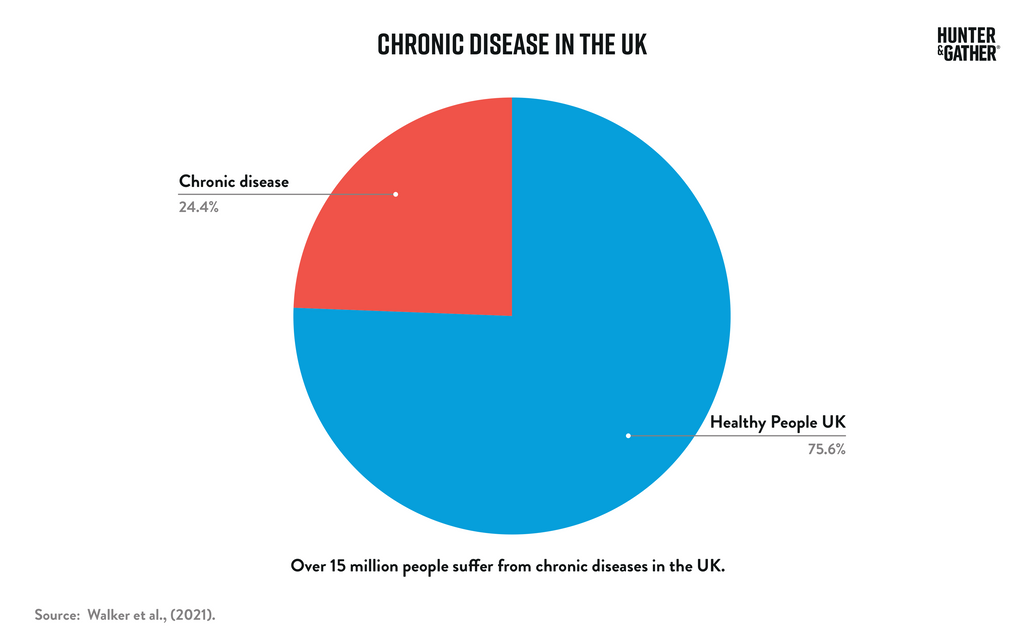
That’s at least 15 million people. [3]
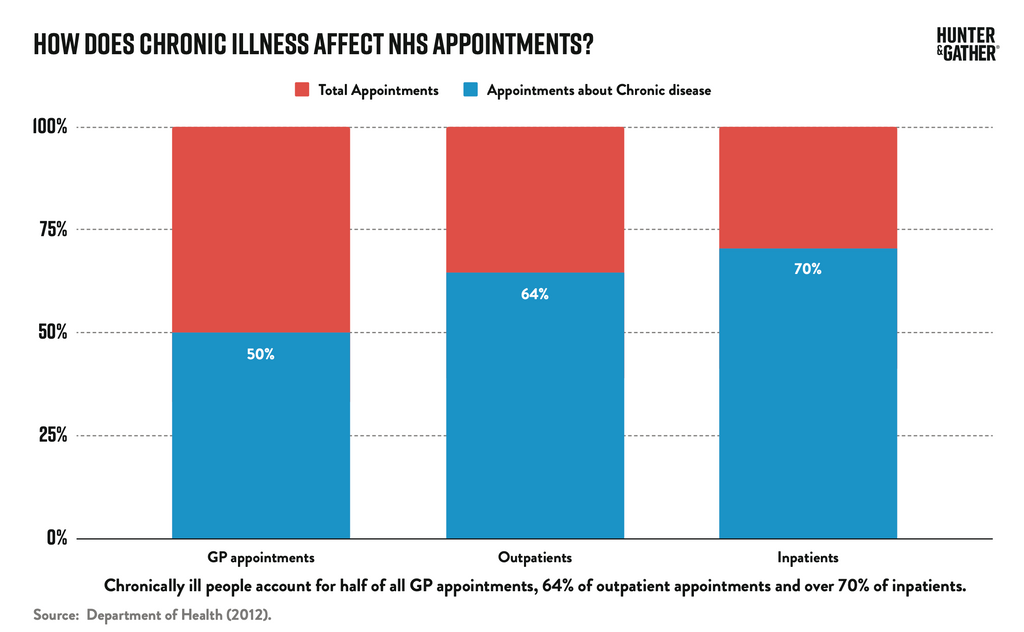
Chronically ill people account for half of all GP appointments, 64% of outpatient appointments and over 70% of inpatients. [4] But the NHS is a rickety bridge being stampeded.
Those people existing in the poorest strata of our societies have a 60% higher prevalence of chronic disease, with a 30% increase in severity compared to those in the wealthiest. [5]
Our American cousins suffer worse.
Since health surveyors in the US first recorded the state of chronic disease in 1935 there has been a 700% increase—60% of Americans deal with at least one long-term condition. [6] Our modern era seems to be characterised by chronic inflammation [7], the root of so many persistent illnesses.
Are you a player in a game over which you have no control?
Or, is there something you can do to remove at least one thing that may be causing this epidemic of inflammation?
We think there is, and you can start taking action by reading this article about industrialised seed oils and their transition from a mere drop within our diet, to a wave sweeping ancient fats aside.
Fats 101
Eating as much protein and carbohydrate as you like wouldn’t prevent you from dying unless you added certain fats.
Fats, scientifically called lipids, play an incredible array of different and critical roles within us. All fat-containing foods have varying fractions of the following three lipids. They are saturated fats (SFAs), monounsaturated fats (MUFAs), and polyunsaturated fats (PUFAs). PUFAs are further characterised as omega-3 and omega-6 fats.
SFAs add rigidity and form to cell membranes (walls).
Striking a perfect balance, MUFAs add a touch of fluidity allowing nutrients access and simultaneously permitting waste products and signalling molecules out. PUFAs add more fluidity and signalling properties—passing on electrical and chemical messages that are forever whizzing from place to place, from cell to cell. These characteristics allow PUFAs to perform certain tasks but make them more susceptible to damage by heat, light and oxygen—discussed later.
The brain is a dense source of these fluid fats. With the water removed, the brain is 60% fat, half of which are PUFAs as the omega-3 DHA, and the omega-6 arachidonic acid (AA). [8]
Essential Fats
Certain fats are classified as ‘essential’.
In a biological sense, essential means something that must be obtained from the diet because it cannot be synthesised inside the body. Humans can make SFA and MUFA from carbohydrates, so they are non-essential fats. Different types of SFAs and MUFAs are also found in abundance in our most ancient and nutritious foods—good old-fashioned animal products. So really it’s certain PUFAs that we must get from our diet.
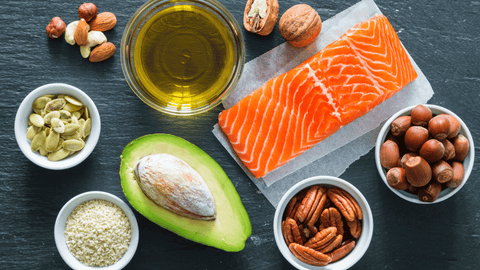
EPA (Eicosapentaenoic Acid), DHA (Docosahexaenoic Acid) and ALA (Alpha-Linolenic Acid) are essential omega-3 fatty acids that come under the PUFA umbrella.
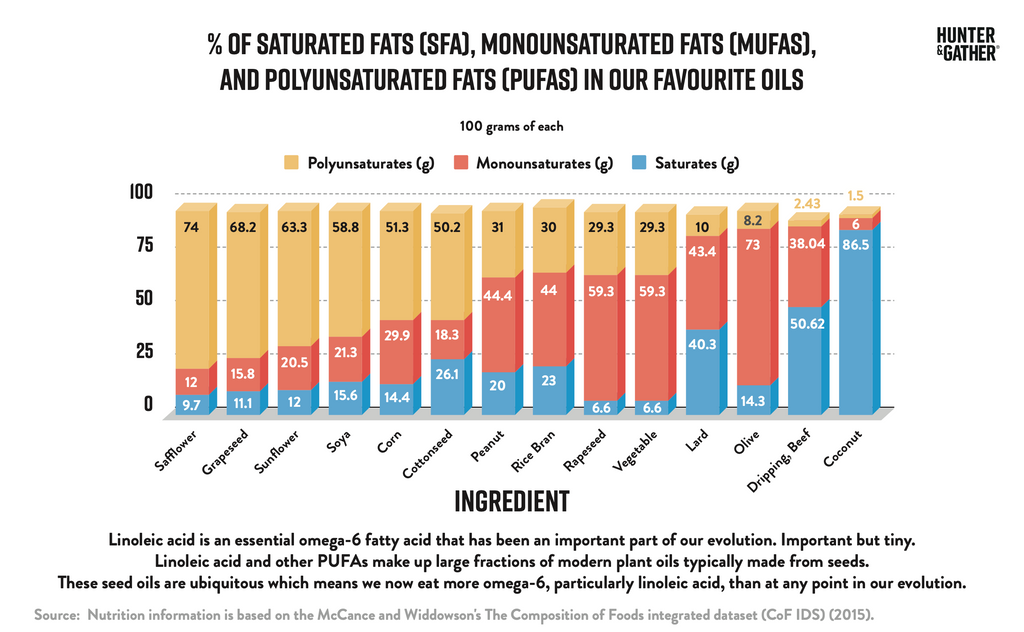
Linoleic acid is an essential omega-6 fatty acid that has been an important part of our evolution. Important but tiny. Linoleic acid and other PUFAs make up large fractions of modern plant oils typically made from seeds. These seed oils are ubiquitous which means we now eat more omega-6, particularly linoleic acid, than at any point in our evolution.
This flip happened in just a handful of decades.
Familiarise yourself with the chart below and see what proportions of fat make up your favourites.
Which seed oils?
Firstly, we need to answer what are seed oils? These are industrially processed oils.
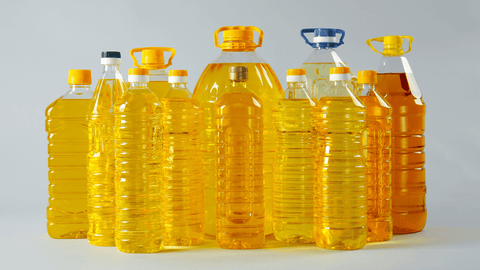
Seeds popular for their oil include cotton seeds, soybeans, corn, sunflower, safflower, canola (modified rapeseed), rice bran, peanut, and grape seed. These seed oils are high in PUFAs, specifically linoleic acid. We’re not talking about fruit oils such as olive, avocado, and coconut oil. The first two are high in monounsaturated fats, the last is high in saturated fat respectively. They have been eaten for centuries at least. We’re also not talking about linseed (flaxseed) oil, which is rich in an omega-3 called alpha-linolenic acid (ALA).
Finally, conjugated linoleic acid (CLA) is a healthy omega-6 fat found in small amounts in ruminant animals and their milk. [9]
Linoleic acid is central to any debate about seed oils. Look at the chart below to familiarise yourself with the levels of linoleic acid found in your favourite fats and oils.
In the UK, sunflower is the most popular seed oil.
In the US, it’s soybean oil.

Why have these seed oils taken over our food supply? From where and when did they come?
It all started in America with cottonseed oil.
When Technologies Combined and Created Junk
‘Cottonseed was garbage in 1860, fertiliser in 1870, cattle feed in 1880, and "table food and many things else in 1890.”’ —The Rise of the American Cottonseed Oil Industry (1930) [10]
The world’s relationship with seed oils stretches back to the days of human-powered cotton plantations, recent independence from British dominion, and the catastrophic US North-South divide.
A mere two hundred years ago or so.
Evolutionarily speaking, that makes them hot off the press. In 1799, the neonatal US government granted Charles Witting from Massachusetts a patent to extract oil from cottonseeds. His intention was to replace the sperm whale oil lamps lighting America with a cheaper convenient oil that involved fewer fatal harpooning accidents.
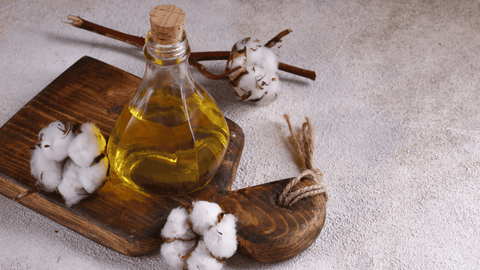
As the decades flicked by, the idea and technologies exchanged hands a few times before a fistful of industrious men began building mills for the purpose of crushing, hulling and filtering cotton seeds to extract the oil at scale. In 1860, seven mills across the US were crushing about 50,000 tonnes of cottonseeds. By 1890, 119 mills were turning over nearly 20 million tonnes every year.
Almost none of that was being eaten.
What had previously been a waste product that unscrupulous companies were being fined for dumping into rivers, had now become an industry in its own right. Cottonseed oil was used for a million different purposes including as an industrial lubricant, in paints and coatings. For treating and softening textiles, in soaps and cosmetics, as lamp oil, and candle making to name a few.
But it wasn’t until a few technologies united at the end of the 19th and beginning of the 20th Centuries that things began to change.
Firstly, industrial bleaching and deodorising techniques turned spoiled, stinking oils into fresh-smelling, neutral-tasting products that people could consider eating.
Secondly, Leon Meriot, a French engineer patented an extrusion machine. By applying heat and exerting substantial pressure, the innovative machine demonstrated the ability to extract considerably larger amounts of oil than the traditional method of crushing seeds between two large stones powered by trudging donkeys oblivious of their endless circular journey.
Thirdly: The biggest leap forward was heralded by the soap and candle manufacturers, Proctor and Gamble (P&G). In 1908, the brothers-in-law purchased the rights to the hydrogenation process newly developed in Germany, and unwittingly sentenced millions of future people to an early death. [11]
Hydrogenation transforms oils into solid fats like lard.
Annoyingly runny oils became conveniently spreadable with a longer shelf-life. They were also loaded with trans fats. By 1911, ‘all vegetable’ Crisco was born and P&G had their wonder product. Before the advent of any regulatory bodies, P&G were able to proclaim Crisco was a ‘healthier alternative to cooking with animal fats’. These claims were based on their wishes, not science.
Just one year later, Dr John Herrick detailed the first recorded heart attack. His patient survived after ‘falling as flat as a pancake’ which surprised Herrick and his small group of contemporary cardiologists.[12]
Seemingly erupting out of nowhere, the next one hundred years saw heart attacks becoming increasingly common, eventually surpassing infectious disease to be crowned the world’s biggest killer.
Cardiovascular disease remains in the top spot to this day with cancer hot on its heels.
Amid growing concerns about the heavy usage of agricultural chemicals in cotton farming—and as the diet-heart hypothesis of saturated fat causing heart disease began to take hold of common sense—P&G swapped hydrogenated cottonseed oil for hydrogenated canola oil in the 1970s. Canola developed the same decade from rapeseed, was lower in the dreaded saturated fat than cottonseed (26% SFA). [13]
Deodorising, extrusion and hydrogenation made growing seeds for edible oil a big business. Vast areas of land usage swapped from nutrient-dense crops for consumption whole, to plants merely for their oil.
Exorbitant Land Usage
Oil crops are an environmental weapon of mass destruction.
Today more oil crops are grown than fruits, vegetables, pulses, tree nuts and citrus fruits combined. [14] See table below:
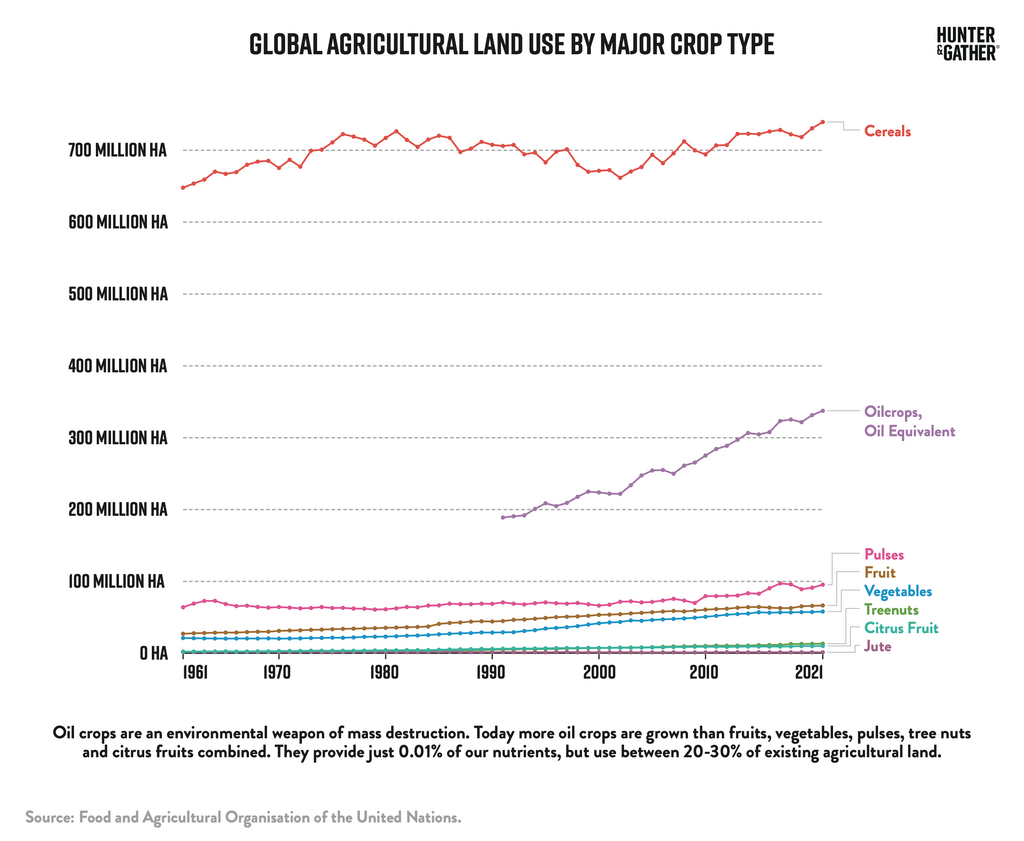
Making up three of the top five most inefficient crops, a single KG of seed oil from soybean, rapeseed (canola) or sunflower could produce between 30-50 KG of nutrient-dense vegetables. [15] Oil crops provide just 0.01% of our nutrients, but use between 20-30% of existing agricultural land. The clear winner four times over is the land required to grow soybeans. Next comes palm oil (which is not a seed oil) then rapeseed (canola), then sunflower.[16]
That’s three of the top four oils that didn’t exist in our diets in this refined form prior to about a century ago. [17]
These oils add very few nutrients, but provide lots of energy—precisely the opposite of what most people need. [18] But this poor ratio of nutrients to energy is not the only thing that these modern oils have added to our diets. As they go through industrial processing, they alter in ways that are far from harmless, from which the fallout is only just becoming clear.
Damaged Goods
The industrial processing of the seed oils including soybean, sunflower and rapeseed (canola) looks like this:
- After gathering the seeds, they’re cleaned of debris.
- Seed conditioning: The seeds are heated and or dried.
- Solvent Extraction: For seeds with lower oil content, such as soybeans or rapeseeds. The seeds are first ground into a fine meal and then mixed with a solvent (such as hexane) to dissolve the oil. The resulting mixture is separated, and the solvent is evaporated to obtain the crude oil.
- Refining: The extracted oil, known as crude oil, usually undergoes a refining process to remove impurities, and improve clarity, taste, and stability.
- Degumming: The crude oil is mixed with water and treated with acid to remove gums and other impurities. The mixture is then separated.
- Neutralisation: In this step, the oil is treated with an alkali solution (usually sodium hydroxide) to remove free fatty acids and other acidic components.
- Bleaching: The oil is passed through an adsorbent material (such as activated carbon or bleaching clay) to remove pigments, trace metals
Restore Balance: The Importance of Salt & Electrolyte Minerals