
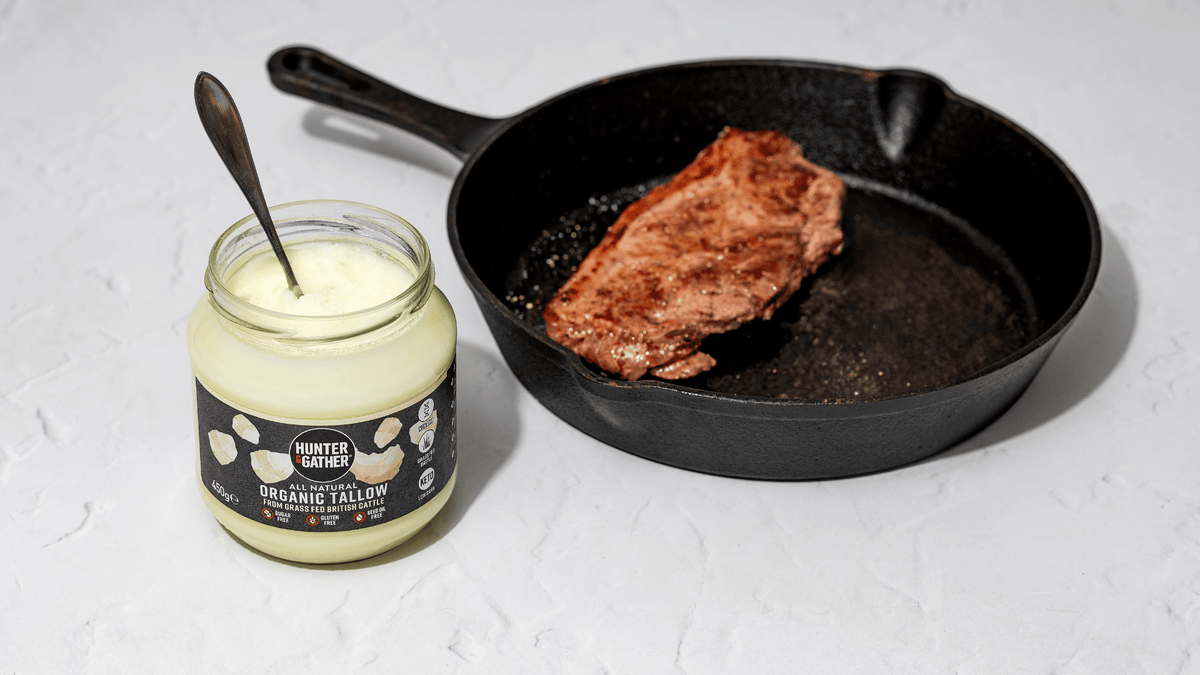
Setting the record straight on this maligned animal fat.
Executive Summary
PART 1: Setting the record straight.
- Beef tallow (dripping) is high in saturated fat.
- Weak, cherry-picked observational data were used to vilify an important and ancient part of a nutritious diet—meat, high in saturated fat.
- The influential research that triggered a global anti-saturated fat narrative grouped saturated fat with industrial trans fats. Trans fats cause cardiovascular disease.
- The highly politicised US Dietary guidelines set the stage for the entire world’s nutrition guidelines.
- Carbohydrates and ultra-processed oils replaced ‘animal’ saturated fats, including beef tallow.
- Chronic diseases have increased, including obesity, despite a reduction in saturated fat.
- Recent research has usurped previous data condemning saturated fat as a cause of disease.
PART 2: Beef tallow is healthy.
- The real strength of beef tallow is its saturated fats which makes it more resistant to oxidation and the perfect choice to cook with.
- Saturated fat is so important it’s made inside the body if not consumed in high enough quantities.
- Grass-fed tallow has a more desirable fatty acid profile than conventional tallow.
- Contrary to what others say, it’s not a rich source of fat-soluble vitamins.
- Beef tallow makes an excellent, bioavailable skin cream.
Introduction
By the 1950s, heart disease had become the world’s deadliest disease.
Its icy reach transcended class, gender and socio-economic disparities, even striking down the world's most powerful man. Scientific researchers endeavoured to track the cause but relied on a type of science unable to achieve that. Sensationalism followed on the heels of research errors, creating a scapegoat: Saturated became public enemy number one. Across the West, official dietary guidelines followed, enshrining this dietary dogma, creating an obesity epidemic and boosting the very diseases they set out to reduce. After a lifetime of beliefs trumping common sense and solid evidence, the truths about saturated fats finally reveal themselves.
Beef tallow, about half saturated fat, resists oxidation and damage, making it a healthy choice and a perfect cooking fat.
Part 1: Setting the Record Straight.
- Dr. Thomas L. Cleave, Royal Navy Surgeon General (1906-1983)
THE PAIN STARTED during a game of golf one bright September afternoon in 1955.
The 64-year-old man took himself off to bed early but awoke wide-eyed and gasping. Pale-faced, the man tried to push himself into a seated position, but the strength had left him. His steely blue eyes, normally so uncompromising after a lifetime of hard decisions, now registered confusion and fear. Dwight D Eisenhower, the President of the United States of America, had suffered his first heart attack.[1]
The world looked on in horror.
The American public demanded to know what the hell was happening. If the leader of the most medically advanced country in the world could be plucked from his slumber, what hope did they have? Eisenhower’s physician, Dr. Paul Dudley White, became laser-focused on finding a cause. He turned to the only man he knew of with anything close to a theory. That man was Ancel Keys, and his theory was to become known as the diet-heart hypothesis—the idea that a diet high in saturated fats and cholesterol causes heart disease. Keys created a fatty scapegoat that is still, in some circles, unfairly maligned.
Saturated fat became public enemy number one.
A fatty scapegoat
US government scientists pinned their hopes on Ancel Keys and his theory.
In 1952—three years prior to Eisenhower’s heart attack—Keys had already studied the diet of 84 men from Naples. This research was to become the first spark igniting his belief that less dietary fat was responsible for their lower incidence of heart disease versus Americans, British and Danish men of similar ages.[2] However, his paper warned, ‘It would be unwise to draw sweeping conclusions from the Naples findings about the relation between diet and the incidence of atherosclerosis.’ A year later, in 1953, Keys analysed the existing dietary data from 22 countries and selectively chose six.
See the figure below taken from his paper:[3]
The six countries Keys selected show a strong correlation between fat calories and deaths from heart disease for men aged between 55-59. He confidently proposed in the paper, ‘It must be concluded that dietary fat somehow is associated with cardiac disease mortality, at least in middle age.’ Unfortunately, it took four years before any other scientists plotted all 22 countries.
They discovered Keys’ unscientific cherry-picking.
‘It is immediately obvious that the inclusion of all the countries greatly reduces the apparent association,’ Jacob Yerushalmy and Herman E. Hilleboe, a Berkeley statistician and New York State Commissioner of Health, respectively, wrote in their 1957 paper.[4] What’s more, the two scientists plotted their chart using the same data to which Keys had access. This time, deliberately selecting countries that showed the precise opposite—that a high-fat diet meant fewer deaths from heart disease. See the chart below.
Sadly, the horse had already bolted.
Eisenhower, rather inconveniently, had his heart attack two years before these two diligent scientists decided to fact-check Ancel Keys’ work. Keys selected the six countries that supported his hypothesis, which at this point was that dietary fat played a role in heart disease. And, because no one else had any idea what might be causing the epidemic of heart attacks, he ended up front and centre with, at best, a flimsy association which would form into his diet-heart hypothesis. The criticisms by Yerushalmy and Hilleboe came a year into Keys’ magnus opus; he was damned if he would let them scupper his success.
A $200,000 grant (about $2 million in today’s money) from the US Public Health
Service facilitated Keys’ next step.
The Seven Countries Study began in 1956 and comprised 11,579 men aged between 40-59, all free from heart disease at the outset. Over the next 15 years, 618 men in the study died from cardiovascular disease. Keys used data from the subjects in the United States, Finland, Yugoslavia, Italy, Greece, Japan, and Holland.[5]
The other country’s data, which were plotted contrary to his thesis, he ignored.
The major problem with the Seven Countries Study is that by design, it simply cannot show causation of heart disease by saturated fat because it’s an observational paper with variables that do not allow such precision. Also, as discussed, Keys cherry-picked supportive evidence only.
He also ignored that sugar had a stronger correlation than saturated fat with heart disease.[6]
Nina Tiecholz forensically examined Keys’ data and research methods and spoke directly to some of the scientist’s former colleagues for her book ‘The Big Fat Surprise: Why Butter, Meat and Cheese Belong in a Healthy Diet’ (2014) discovered only 3.9% of people included in the study actually had their diets recorded by the researchers.[7] And, during the data gathering, as many as 60% of those were on short-term religious diets for Lent.[8] They were abstaining from meat and other animal products high in saturated fats.
These short-term changes were recorded as long-term eating habits.
But, more important than any of those errors and weaknesses is this: Keys grouped together saturated fat with industrial trans fats[78]. Trans fats are toxic and inflammatory and cause heart disease.
As a result of the Seven Countries Study, cardiovascular disease researchers elevated a then contrived and now clichéd Mediterranean diet of ‘grains, pasta, legumes, vegetables, fruits, olive oil, [and] bread’[10] recommending it to the world lest everyone drop dead of a heart attack.
Ancel Keys blamed the saturated fat found in red meat—temporarily missing from many participants’ diets during data collection in the Mediterranean areas with lower cardiovascular disease—for the epidemic of heart disease in highly affected areas. The diet-heart hypothesis was an exciting new ball with which scientists, drug companies, food companies and governments worldwide could run. This rampant dogma ran wild well into the 2000s, whilst dissenting voices were ignored and laughed at by a scientific community acting like pecking hens. Anyone questioning this dogma were silenced in the most predictable way; they had their funding pulled. [10]
The diet-heart hypothesis never graduated from being a hypothesis.
However, many scientists judged it ‘settled science’ and used their careers to support the anti-fat narrative and never, ever challenge it. Today, this kind of anti-scientific behaviour is worse than ever. At the push of a button, one side of a debate can be deemed ‘misinformation’ and snuffed from existence. If only discourse had been permitted during and shortly after the Seven Countries Study, perhaps we wouldn’t have rushed into the arms of the real killer fats, trans fat and oxidised vegetable oils (seed oils). [You can read more about that here]
The Seven Countries Study ignited the world’s misplaced fear of saturated fat.
People became convinced of saturated fat’s culpability in heart disease. Low-fat diets became trendy. Those with willpower shed excess body fat which generally lowers many of the blood markers associated with heart disease.[11] To successful dieters, their low-fat eating was definitive proof that fat had been the culprit. George McGovern, a US senator, lost weight nearly 7 kg on a low-fat Pritikin Diet. The strict regime also recommends eliminating processed foods and sugar. His cardiologist gleefully reported his reduced heart disease risk. In McGovern’s mind, by reducing saturated fat, he had embodied the proof against it.
In reality, his elimination of processed foods, snacking, sugary drinks, puddings, biscuits, cakes and other obviously fat-inducing foods was more than likely responsible for his weight loss and corresponding improvement in heart disease blood markers—but, as they say, never let the facts get in the way of a good theory.
Come 1976, Senator McGovern was about to lead the charge against saturated fats.
A step in the wrong direction
Sallying forth with a team of anti-fat scientists, Senator McGovern led the first-ever governmental production of nutrition guidelines known as the ‘Dietary Goals for the United States.’[12]
This report attempted to alter American diets to reduce their risk of chronic disease, especially heart disease. It would later morph into the US Dietary Guidelines (1980), which echoed around the world, ostensibly saving many other countries the hassle and expense of doing their own research but, in reality, dragging them into the same hole of obesity and chronic disease.
In a nutshell, the guidelines advised people to reduce overall fat intake, especially saturated fat-containing foods and foods high in cholesterol—animal products stepped into the firing line. Polyunsaturated vegetable oils (seed oils) should replace animal fats, the guidelines instructed, which are relatively high in both saturated fat and cholesterol. People began perceiving fat-rich—and nutrient-rich!—animal products as poisonous despite a lack of evidence. A large slice of the advice was to base meals around carbohydrates in the form of grains and other starches. To eat more fruits and vegetables, less salt and less sugar. Of course, all carbohydrates break down into sugars in the body, but as you’ll see, this advice was never about science.
In spite of these other recommendations, the emphasis of all versions of the dietary guidelines has been to reduce saturated fat in a misplaced bid to reduce the world’s biggest killer.[13]
The disease that woke Eisenhower in the middle of the night and that would eventually squeeze the life out of him and so many other people. Developed in 1992, the iconic US Government Food Pyramid became the world’s reference: Notice the base, 6-11 servings of high-energy, low-nutrient grains.
Senator McGovern’s dietary goals and the subsequent versions of the US Dietary Guidelines were steeped in conflicts of interest.
Gary Taubes, after interviewing some people directly involved, writes in ‘Good Calories, Bad Calories’ that even the National Institutes of Health (NIH) and Food and Drug Agency (FDA) considered Dietary Goals a ‘political document rather than a scientific document.’[14] Denise Minger, in ‘Death by Food Pyramid’, writes that food lobby groups from almost all corners pushed and pulled at the guidelines.
Their influence forced new industry-favourable versions to be released at the end of the 1970s and all versions since.[15]
Science be damned.
At the end of the 1970s, the United States Department of Agriculture (USDA) hired nutrition scientist and public health expert Luise Light and a team of researchers to write an evidence-based diet for America. They made several recommendations, including lowering processed and sugary foods. After sending her sensible nutrient-focussed guidelines to the director of the USDA for approval, they came back completely changed. 3-4 daily servings of whole grain breads and cereals became an obesogenic 6-11 servings. The level of grain processing (whole grain or ultra-processed white) was left down to the individual. Alone in her objections to these alterations, and perhaps naïvely, Light stormed into her boss's office. ‘I was told this was done in order to keep the lid on the costs of the food stamp program. Fruits and vegetables were expensive, much more expensive than breads and cereals, and the added servings of grains would, to some extent [because of fortification], offset the loss of nutrients from fruits and vegetables,’ she writes in her 2004 exposé ‘A Fatally Flawed Food Guide’.[16] Of course, more expensive than fruits and vegetables, are animal products. Generally, they’re also much more nutritious.
What had started as a project to reduce chronic disease soon became politicised and corrupted.
Critically, it’s important to remember that the UK’s dietary recommendations followed the 1980 US guidelines just three years later, in 1983. The US Dietary Guidelines heavily influenced them. And, just like in the US, the recommendation to reduce dietary fats—with an emphasis on saturated fats—was not supported by the best available evidence. Zoe Harcombe PhD (2015) assessed the ‘best available evidence’ which was six randomised control trials (RCTs).[17] Unlike the observational papers—including the Seven Countries Study and others used to form the US Dietary Guidelines and, by extension, most of the rest of the world—RCTs can show causation. The six intervention trials did not show a significant reduction in heart disease or deaths resulting from a reduced fat diet. In other words, they flew in the face of Keys’ diet-heart hypothesis. Five of these papers were available to Senator McGovern and his team but were excluded in favour of weaker evidence that nonetheless supported their existing beliefs about the culpability of saturated fat in heart disease. But the proof is in the pudding.
Since the dietary guidelines and its advice to reduce saturated fat, how much healthier is the world?
What’s changed?
Heart disease is still the world’s biggest killer.[18]
In England and Wales, heart disease has recently been swapped for dementia as the overall leading cause of death and the leading cause of death in women.[19] But for men, it’s still heart disease.[20] In the US, the leading cause of death is still heart disease.[21]
Being obese increases your chances of dying from heart disease.
For every five-point increase in body mass index, one study found a 32% increase in the risk of heart failure.[22] Since McGovern and his team first sat down with the problem of people’s diets as they saw it, obesity has tripled around the world.[23]
Bravo!
In England, 64% of people are overweight.[24] In Scotland, that number is 67%.[25] Around three-quarters of all lives lost around the globe are victims of chronic disease. According to the World Health Organisation (WHO), it’s taking an ‘immense and increasing toll on lives’.[26] And, all this whilst the consumption of saturated fats, particularly from animals, has reduced.[27] See the image below:
Can it be that saturated fats were not the problem?
The truth is gradually filtering through
- Max Planck (1858-1947), German Physicist
Six years later, a team of nutritional scientists began picking away at the diet-heart hypothesis after conducting a meta-analysis of epidemiological (observational) studies.[29] They reported ‘no significant evidence for concluding that dietary saturated fat is associated with an increased risk of [heart disease].’ The paper caused a bit of a stir, and predictably, a flurry of critiques attacked their findings.[30] But, the diet-heart hypothesis was no longer untouchable ‘settled science’.
The saturated-fat-causes-heart-disease model was beginning to crack.
Four years later, another review assessed a phenomenal amount of papers including 51 observational studies totalling 556,246 people and 27 RCTs including 10,352 people. The author concluded: ‘The evidence did not clearly support cardiovascular guidelines that encouraged high consumption of polyunsaturated fatty acids and low consumption of total saturated fats.’[31] A review of the study urged caution because much of the evidence was of an ‘observational nature’ and maybe ‘a little too strong and may not reflect the advice of some [nutritional] guidelines.[32] Bear in mind that the whole world embraced a low saturated fat, high carbohydrate diet based on much less observational data than was assessed in this 2014 review.
The reviewers couldn’t accept that they had been hoodwinked for so long.
More papers emerged, including Zoe Harcombe’s analysis (discussed earlier) of the RCTs available at the time of writing both the US and UK dietary guidelines.[33] Fast forward to 2020, and possibly the most damning review of them all published by the Cochrane Collaboration.[34] The truthseekers assessed RCTs as well as observational papers concluding ‘little or no effect of reducing saturated fat on all‐cause mortality or cardiovascular mortality.’[35]
In 2021, a review paper showed ‘associations of SFAs [saturated fats] with [heart disease] in opposite directions dependent on the food source.’[36] (Emphasis ours). In other words, they found that as long as the saturated fats came from a nutritious food source, as opposed to junk food, they showed a positive effect on heart disease.
One more.
Come 2022, a comprehensive review of RCTs and observational papers, had this to say, ‘...the consumption of SFA [saturated fat] is not significantly associated with [heart disease] risk, events, or mortality. Based on the scientific evidence, there is no scientific ground to demonise SFA as a cause of [heart disease]. SFA naturally occurring in nutrient-dense foods can be safely included in the diet.’[37]
What a relief.
Common sense at last
Since Ancel Keys cherry-picked his way to fame and fortune in the 1950s, it has taken nutrition scientists nearly seventy years, almost an entire lifetime, to flip his hypothesis on its head.
The common sense exhibited by Dr Thomas L. Cleave, the Royal Navy Surgeon General whose quote begins this article, was correct all the long. It really was ludicrous to blame an ancient food (saturated fat found in red meat) for a modern disease (heart disease).
Now, let's look at the benefits of our beef tallow, organic and sourced from grass-fed British cattle, which is about 49.8% saturated fat.[38]
Part 2: Beef Tallow is Healthy
There are no exceptions to the following rule:
All natural food fats, plant and animal, contain a mixture of saturated, monounsaturated, and polyunsaturated fats. Something is named one or the other based on its largest fraction. Therefore, beef tallow—traditionally called beef dripping in the UK—is known as saturated fat (49.8%).[39] Lard is 45.1% monounsaturated fat and 39.2% saturated fat. Therefore, the pork fat should accurately be called a monounsaturated fat. However, as the anti-fat narrative swept the world, the previously scientific term ‘saturated fat’ managed to pick up the word ‘animal’ somewhere during its journey from lab to household. As a result, most people still mistakenly believe that animal fats and saturated fats are synonymous. Hence, lard is often called saturated fat. But it no longer matters as we’ve established in Part 1.
There’s no need to shy away from saturated fats because the charges against them were unjustified.
How nutritious is grass-fed beef tallow?
Down at H&G HQ, we’re not going to sit back and echo what people say about beef tallow.
We’ll check for ourselves, thanks. And, despite what others say, beef tallow probably isn’t a great source of fat-soluble vitamins (A, D, E & K). As you’ll see, this is nothing to worry about. In realistic quantities, it has some, but it depends on the cow’s breed, feed and environment. For example, grass-fed beef tallow is a richer source of vitamins than conventional tallow and has a better fatty acid profile—this is just one of the reasons we chose grass-fed tallow.
The data on fat-soluble vitamins in beef tallow are conflicted and few and far between. To illustrate this, see the US and UK comparison chart below:
The data on fat-soluble vitamins in beef tallow is a mess. It’s likely that the vitamin K content in beef dripping is a mistake. We have reached out to the foremost expert on vitamin K and will update this if we can.[40]
The best fat for cooking
But here’s the thing.
What you want from beef tallow is its stability and resistance to oxidation when heated.
In other words, you want it to be a good cooking fat. We think it’s the best fat for cooking precisely because it’s predominantly saturated fat. That means it doesn’t break down easily at home like the ‘cooking’ oils lining supermarket shelves everywhere.
Fat saturated with hydrogen atoms is called, you guessed it, a saturated fat.
Monounsaturated fats have one double bond and are found in foods like olive oil and avocado. In contrast, polyunsaturated fats (omega-3 & omega-6) have multiple double bonds and are common in fish (omega-3), flaxseeds (omega-3), and most vegetable oils (omega-6). The more double bonds a fat has, the less stable it becomes, leaving it vulnerable to damage from heat, light, air, time, and moisture.
We have a detailed discussion of this problem in our blog ‘The Unsaturated Truth: Drop Seed Oils if You Want to be Healthy’.
For cooking, it’s critical that you use a stable fat. Beef tallow is perfect.
Is beef tallow healthier than butter?
We’re often asked to compare butter and beef tallow, but they’re both great for different reasons. Tallow is a much better choice for cooking, as outlined above. Butter is higher in fat-soluble vitamins and has an unbeatable taste but burns at a much lower heat than beef fat. Clarified butter, such as Ghee, has a higher smoke point than butter and is better for cooking, but it’s still not as good as tallow.
Is beef tallow healthier than olive oil?
As mentioned above, beef tallow can’t be compared with olive oil in any helpful way because they’re so different. We love our beef tallow, but we don’t recommend using it on a salad! That’s where our cold-pressed olive and avocado oils come in. We prefer using oils for cold or warm dishes and our tallow or ghee for cooking.
Saturated fat = life
Each of these fats can be divided into subgroups. In this article our focus is saturated fat and the other beneficial properties of beef tallow.
Palmitic Acid 51.4%
If you don’t eat enough saturated fat, your body will make it from the other fats, carbohydrates and proteins in the form of palmitic acid.[45]
Our bodies are between 20-30% palmitic acid at all times. This is tightly controlled because this specific saturated fat is so essential for the body and brain.[46] It plays a role in energy storage, cell membrane integrity and cell signalling, hormone production, vitamin absorption, myelin sheath formation (protection of nerves), lipid metabolism, immune function, satiety and energy regulation via heat production.[47]
But, because Palmitic acid raises LDL cholesterol—which is often oversimplified as 'bad cholesterol' because it’s central to the diet-heart hypothesis—all of its critical functions have been buried beneath the sensationalism created by Ancel Keys’ cherry picking and the waves of obsequious lipid scientists who, lacking critical thinking abilities and gumption, followed in his wake.
Stearic Acid 39%
One of the most interesting things about stearic acid is its ability to increase mitochondrial fusion. This is when mitochondria merge, increasing efficiency and energy production, which in turn improves the resilience of a cell.[48]
Stearic acid also increases the insulin sensitivity of fat cells and shrinks them.[49]
The more insulin-sensitive cells are, the more regulated blood sugar remains, reducing the inflammatory and oxidising effects of chronically elevated blood sugar.[50] Saturated fats also help increase the secretion of glucagon, an appetite suppressor known as the ‘fat-burning hormone’ because it increases energy expenditure and thermogenesis (body heat).[51]
Myristic Acid (7.6%) & Lauric Acid (1.9%)
One of the best things about grass-fed beef tallow is that it makes a fantastic skin cream. It’s easily absorbed into the skin, unlike petroleum-based products,[52] because of its similarity to human body fat.[53] It contains myristic acid (MA), which has been found to reduce inflammation and pain in both lab tests and animal studies.[54]
Lauric acid has antimicrobial benefits, which also has an anti-inflammatory effect[55] and has been shown to improve acne.[56] Lauric acid has positive metabolic effects, being used as an energy source preferentially over being stored as body fat.[57]
Conjugated Linoleic Acid (CLA) & Omega-3
Grass-fed beef tallow is richer in the natural trans fat known as conjugated linoleic acid (CLA) versus conventional tallow.[58] Fresh pasture forages have much better CLA to omega-3 ratios than cereal grains, a percentage of which will make its way into the tallow.[59] Omega 3, as alpha-linolenic acid (ALA), is also richer in grass-fed beef tallow, which serves as a precursor to creating more CLA.[60] However, if cattle switch back to grain, within a month, the antioxidant (vitamin E) content, CLA and omega-3 will drop drastically.[61] Another reason we chose grass-fed tallow.
CLA has some surprising benefits.
In a review and meta-analysis (2020) over 6–16 weeks, the natural trans fat (not to be confused with industrial trans fat) significantly reduced body weight, BMI, and total body fat of the women subjects.[62] When combining CLA with exercise, research has shown a reduction in body fat and an increase in insulin sensitivity in the absence of body weight reduction.[63] This suggests an increase in muscle mass and improvement in metabolism.
Fat-soluble vitamins
As mentioned, we don’t think the fat-soluble vitamins in beef tallow are its major selling point because the data is a mess and red meat, especially offal, is such an amazing source of them. However, they're still worth discussing.
Grass-fed tallow is more yellow than conventional beef tallow because it’s higher in carotenoids—the orange colour in carrots—a precursor to the usable form of vitamin A.[64] 80% of carotenoids may be destroyed in the production of silage for conventional beef.[65]
Grass-fed beef tallow is also higher in the fat-soluble antioxidant vitamin E than in conventional tallow. In order to come close to the same levels the cows must have vitamin E-supplemented feed.[66] Vitamin E’s presence stabilises the small amount of PUFAs in beef fat preventing it from going rancid as quickly. Because grass-fed tallow is higher in the omega-3 PUFA alpha-linolenic acid, this makes it more important still. ‘The concentration of natural α-tocopherol (vitamin E) found in grain-fed beef ranged between 0.75 to 2.92 μg/g of muscle whereas pasture-fed bee
‘Healthy’ Whole Grains Are a Lie
The Health of the Nation: A Wake-Up Call for Our Healthcare and Dietary Future