
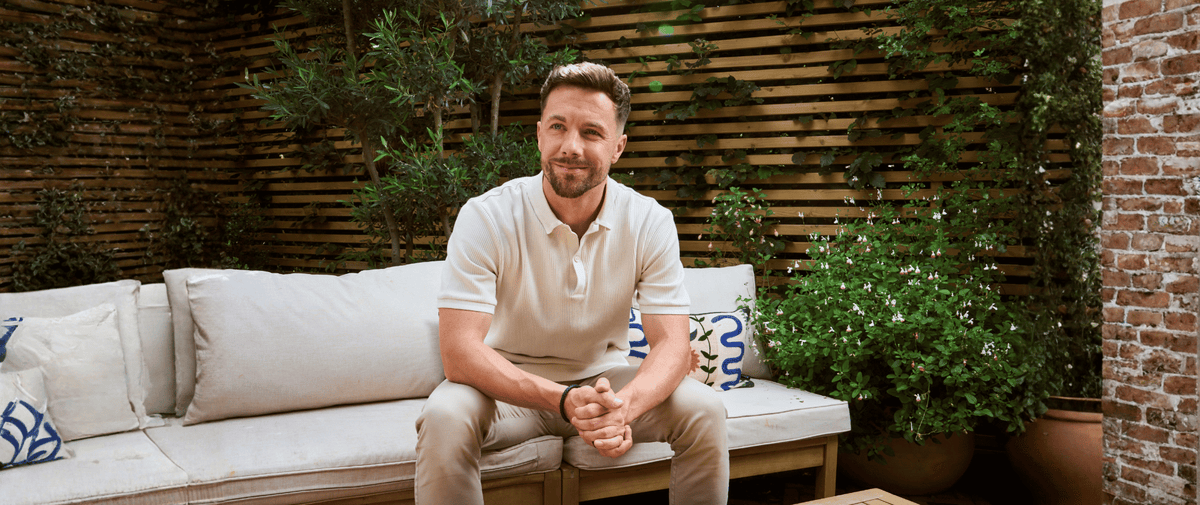
By Jeff Webster, Co-Founder of Hunter & Gather
Someone recently commented on one of my Instagram videos: “You’re just a bore.”
I laughed. 😅 There’s something quite funny about feeling strongly enough about a stranger’s choice of washing powder, footwear and drinking water that you feel compelled to tell them.
I can also understand why some of the choices I’ve made might look restrictive from the outside. I don’t drink alcohol regularly. I avoid synthetic fragrances where I can. I prefer natural fibres. I’ve worn barefoot shoes since 2012. Our evening lighting probably looks slightly strange to someone accustomed to bright ceiling lights until bedtime. And yes, I squat when I go to the toilet.
But I don’t really see any of this as restriction. If anything, the opposite is true.
Over the last 14 years, I’ve gradually made decisions about what I eat, drink, wear and bring into our home because I want to put myself in the best possible position to enjoy life. I want the energy and physical freedom to be present with my family, spend time outdoors, compete in dog agility, move well, explore, learn and build a business that gives me an enormous sense of purpose.
To me, that doesn’t sound particularly boring.
New to “crunchy”? It’s internet slang for the natural-living, question-everything end of wellness. Barefoot shoes, real food, candles over spotlights. We call it letting life back in.
How I ended up down this rabbit hole
My curiosity really began in 2012, when I was introduced to Paleo and ancestral approaches to health. From there, I discovered the work of Weston A. Price and others who had explored the differences between traditional ways of living and the rapidly changing modern environment.
It made me start questioning things I had previously accepted without much thought. Why do we wear shoes that dramatically change the shape and function of our feet? Why do we illuminate our homes like daytime at ten o’clock at night? Why does practically every household and personal-care product need to be fragranced? Why have chairs almost completely replaced the positions humans once naturally rested in?
And perhaps the bigger question behind all of those: why do we automatically assume that every modern convenience represents biological progress?
I had personal reasons to become curious too. Over time, I became aware of some of my own genetic predispositions, as well as physical and psychological health challenges within my family, particularly on my father’s side. I don’t see genetics as destiny, but it did make me increasingly interested in the parts of my environment and lifestyle that I could influence.
Since then, I’ve consistently tried to navigate towards a life where many of these healthier choices become the default rather than something requiring constant willpower. Choosing not to drink alcohol is one example. Investing in our home environment is another. Making room for community, meaningful relationships, hobbies, movement and time outdoors matters just as much to me.
The point is not to spend less time living. It is to get more from life.
I should also say that I’m a questioner by nature. I enjoy challenging assumptions, and I’m comfortable exploring ideas before every detail has been conclusively settled.
“Absence of evidence is not evidence of absence” is a phrase I come back to frequently. A lack of definitive research doesn’t necessarily mean there is nothing worth investigating. Equally, an interesting hypothesis is not proof that something works.
I think it is possible to hold both ideas at once.
Some of the choices below have reasonably strong research behind them. Others have emerging evidence, plausible mechanisms or simply my own personal experience behind them. Some may turn out to matter less than I currently think they do.
I’m completely comfortable with that. I expect some of my views to change over the years.
So, with that disclaimer out of the way, here are ten of the slightly “crunchy” things I use and why.
1. Reverse osmosis drinking water
We currently use an Osmio Zero 2.0 reverse osmosis system, although I’m already looking at whether we upgrade it at some point and install a whole house filtration system.
I originally became interested in filtering our water because I wanted more control over what we were drinking every day. In particular, I wanted to reduce things such as fluoride, residual water-treatment chemicals and potential microbial contaminants.
That is not the same as saying that British tap water is inherently unsafe. The UK has established treatment and monitoring systems, and I’m not trying to frighten anyone away from their kitchen tap.
For me, it was simply a question of whether, given the option, I would prefer an additional level of filtration in our own home. The answer was yes.
Reverse osmosis is a well-established filtration technology that can reduce a broad range of dissolved substances, depending on the membrane, filtration stages and how well the system is maintained. The Osmio also has a remineralisation stage, which I like.
Would I suggest everyone rush out tomorrow and spend money on an RO filter? No. But water is something we consume every single day, often several times a day, so investing in the quality of ours made sense to me.
2. Natural-fibre clothing
Cotton, wool and linen are my preference, and we pay particular attention to natural fibres for our son too.
Part of this is very simple: I like these materials. I like how they feel, how they breathe and the fact that humans have worn versions of them for generations.
There are also interesting differences between fibres in terms of moisture management, temperature regulation, skin comfort and the particles they shed.
I have also explored some of the more unconventional ideas around the electromagnetic properties or “frequencies” of different fabrics. There are plenty of claims online about linen, wool and other natural fibres carrying particular frequencies that may influence the body.
I haven’t seen convincing human evidence demonstrating those bigger health claims.
Does that prove there is definitely nothing interesting there? No. But it does mean I wouldn’t tell somebody that wearing linen is going to transform their biology.
For now, I see natural fibres as a sensible preference with some practical advantages, rather than something I need to build a grand health claim around.
3. Collagen
I’ve been interested in collagen-rich foods since my early-twenties.
Part of that interest came from my own experience with skin. I had a pretty awful time with acne throughout my teenage years and early twenties and eventually (regrettably) took Roaccutane. That made me much more interested in how the skin works and how we nourish the body from within.
When I started exploring traditional ways of eating, one thing that stood out was how much more of the animal people historically consumed. Oxtail, skin, connective tissue, slow-cooked joints and broths were far more normal than they are in many modern diets.
I still eat those foods. I love slow-cooked meat and bone broth. But realistically, I don’t have oxtail simmering on the hob every day.
Grass-fed Collagen peptides became an easy way for me to consistently include more of those particular amino acids. I normally add Hunter & Gather Collagen to my morning coffee and sometimes to slow-cooked meals. It has become such a normal part of my routine that I barely think about it.
I don’t regard collagen as an acne treatment, nor do I think it replaces getting enough complete protein from food. For me, it is simply a convenient way of complementing a nose-to-tail approach that I already value dearly.

4. Barefoot shoes
I’ve worn barefoot-style shoes since 2012, and the basic reason has never really changed: I want my feet to function like feet.
The human foot is an extraordinary structure. It contains arches, muscles, ligaments, tendons and a huge amount of sensory information that helps us understand the ground beneath us.
Once I started looking at feet in that way, I found myself questioning the assumption that more cushioning and more support must always be better.
If an arch elsewhere were constantly supported from underneath, we might reasonably ask whether the structures responsible for maintaining it were being asked to do less work. That does not automatically prove that arch support weakens the human foot, but it is an interesting question.
There is also research showing that regular use of minimalist footwear can increase measures of foot strength. That interests me because I want strong, adaptable feet rather than feet that only function properly inside a particular shoe.
I also value being closer to the ground. The sensory feedback changes how I move, and I find that I naturally become more aware of where and how my foot is landing.
Human biomechanics obviously developed long before thick wedges of foam appeared underneath our feet.
That doesn’t mean everybody should immediately throw their trainers away. Transitioning too quickly into minimalist footwear can create problems of its own, particularly if someone has spent decades in conventional shoes.
But as a long-term philosophy, maintaining foot strength, balance and ground feedback makes a lot of sense to me.
5. Our evening lighting
This is probably one of the biggest environmental changes we’ve made at home.
In the evening, we avoid bright overhead lights wherever possible. Instead, we use lamps with bulbs chosen to have very low blue-light output and minimal flicker. We also regularly use tallow or beeswax candles with natural wicks and no added fragrance.
Partly, I simply enjoy the atmosphere. Candlelight and warm lamps make the house feel calmer. But there is also good reason to think about light biologically.
For most of human history, night actually looked like night. The light environment changed dramatically after sunset. Today, we can sit in a brightly illuminated room staring into glowing screens until moments before going to sleep, yet our circadian system still responds to those environmental signals.
A lot of this is simply first-principles thinking for me. If I’m trying to understand whether something might be affecting us, I often start by asking: would this environmental input have existed throughout most of human history?
In the case of modern artificial lighting, the answer is clearly no. Roughly 150 years ago, electric lighting in the home as we know it barely existed. LED lighting is much newer still. We have introduced an extraordinarily powerful new light environment into our evenings within a tiny fraction of our evolutionary history.
That doesn’t automatically make it harmful. New does not mean bad. But it does make me curious about whether our biology has had any meaningful opportunity to adapt to being surrounded by bright, blue-rich artificial light long after sunset.
Human research has shown that ordinary evening room light can suppress or delay melatonin compared with very dim light. Shorter-wavelength, blue-rich light is particularly effective at stimulating the light-sensitive pathways involved in regulating our body clock.
What I find particularly interesting is that the potential consequences of disrupting our natural light-dark cycle may extend beyond simply getting a bad night's sleep.
There is an emerging body of observational research looking at artificial light at night and breast cancer. Several large studies and meta-analyses have found modestly higher breast-cancer risk among women with greater night-time light exposure. A 2024 systematic review of 20 studies, for example, found that higher outdoor artificial light at night was associated with around a 12% higher breast-cancer risk.
That does not mean that a bright kitchen bulb or blue light from a phone has been shown to cause breast cancer. These studies are observational, so other factors can influence the results. But when considered alongside what we already know about melatonin, circadian disruption and long-term night-shift work, I think it raises some genuinely interesting questions about the importance of darkness at night.
One recent study went further by considering the wavelength of the light as well as its brightness, because blue-rich light is especially effective at suppressing melatonin. The findings are not definitive, but this is exactly the sort of research I find fascinating. We are beginning to ask not just how much light we're exposed to, but what kind of light and at what time.
And light works in both directions.
While I actively reduce bright light at night, I try to get plenty of natural light during the day, particularly in the morning. Morning light is one of the strongest environmental signals we can give our circadian clock that the day has begun.
There is also an interesting relationship between light and mood. Bright-light therapy has long been used for seasonal depression, and more recent research suggests it may also improve outcomes when used alongside treatment for non-seasonal depression.
I wouldn't suggest that getting outside in the morning is a treatment for depression, just as I wouldn't claim that dimming your lights prevents cancer. But the broader point really interests me:
Light is biological information, not simply something that allows us to see.
My approach isn't to fear artificial light. It's to try to make daytime and nighttime look different again. Plenty of natural light during the day, particularly in the morning, followed by progressively warmer and dimmer light after sundown.
Turning our homes into miniature supermarkets after dark just doesn't make much sense to me.
I should also mention that “natural” candles are not magically emission-free. Burning anything produces combustion products, so ventilation and sensible use still matter.
Further reading: Research into artificial light at night and breast-cancer risk, evening room light and melatonin and bright-light therapy and non-seasonal depression.

6. Blue-light-blocking glasses
I use blue-light-blocking glasses from Swanwick, Block Blue Light and Barner.
This is one area where my own experience has been particularly noticeable.
I’ve worn an Oura Ring for around nine years, so I have an unusually long history of looking at my own sleep data. During periods when I have stopped wearing blue-light blockers in the evening, I have historically seen changes in that data.
More subjectively, I sometimes feel genuinely odd the morning after spending an evening exposed to lots of bright artificial light without them. The best description I have is a strange, slightly hungover feeling.
I’m very aware that personal experience does not establish causation. Lots of things influence sleep.
Research on blue-light-filtering glasses themselves is also mixed.
The much stronger point, in my view, is that light exposure and timing clearly influence circadian biology. So I regard the glasses as an additional layer rather than the foundation of the strategy.
First, we change the environment. We dim the lights and reduce unnecessary bright light. The glasses are something I use on top of that when modern life makes artificial exposure difficult to avoid.
7. Simpler household and laundry products
We use ALLAVARE for our laundry and, more generally, try to keep the number of cleaning products in our home fairly small.
One thing I’ve become increasingly conscious of is how much fragrance has crept into everyday life. Washing powder, fabric conditioner, floor cleaner, bathroom spray, air freshener - somehow “clean” has become synonymous with “strongly scented”.
I don’t really want that.
I’ve always been sensitive to strong smells, so over time I’ve become more interested in stripping things back and asking whether we actually need all of those added fragrances and ingredients.
For basic cleaning, we often use vinegar. It’s simple, inexpensive and useful for plenty of everyday jobs around the home.
For kitchen worktops, high-touch surfaces and the areas our son eats from, we use hypochlorous acid spray.
It sounds very technical, but hypochlorous acid can be produced from water and salt through electrolysis. It has well-established antimicrobial properties and, when formulated and used correctly, can be effective against a broad range of bacteria and other microorganisms.
I like that combination. It does the job we need it to do without filling the room with a strong antibacterial smell or leaving me wondering whether we needed quite so many extra ingredients in the first place.
That doesn’t mean every conventional cleaner is bad, or that simpler automatically means better.
It’s just another example of how I tend to think now: if I can achieve the same result with something simpler, I’ll usually explore that option first.
One practical point - vinegar and chlorine-based products such as hypochlorous acid should never be mixed together. We use them separately for different jobs.
8. Fragrance-free personal care
The same principle applies to the products I put directly on my body.
I generally don’t wear fragrance and prefer personal-care products without unnecessary added scent.
Again, this is not based on the simplistic idea that all synthetic chemicals are bad and everything natural is automatically good. Nature produces plenty of irritating substances. Essential oils can cause reactions too.
For me, it comes back to reducing inputs that I don’t particularly value.
If a fragrance gives me no meaningful benefit and there is an alternative I like just as much, why add it?
Over time, that simple question has changed quite a few things in our home.
9. Primordial resting positions
This is probably one of my favourite areas to explore because it requires no product at all.
I’ve become increasingly fascinated by what I think of as primordial (otherwise known as ancestral) resting positions: the deep, heels-down squat, kneeling, sitting cross-legged or simply spending time on the floor.
These were once ordinary human positions.
Today, most of our rest takes place in chairs, sofas, cars and office seats. We have become so accustomed to chairs that we have turned positions humans once rested in into mobility exercises people now need to train for.
Research involving the Hadza hunter-gatherers in Tanzania found that they spend considerable periods resting, but often in squatting and kneeling positions. Researchers described this as a form of “active rest”, because these positions require more lower-limb muscle activity than conventional chair sitting.
I find that idea fascinating.
Can you comfortably lower yourself into a deep, heels-down squat and stay there? Can you kneel? Sit on the floor? Get down and back up again without it becoming an event?
We talk increasingly about grip strength as a useful marker of physical function and ageing.
I sometimes wonder whether the ability to comfortably access these primordial resting positions will eventually be thought about in a similar way.
To be clear, a resting squat has not been proven to predict longevity in the way certain established physical-performance measures have.
But it does demand a combination of ankle mobility, hip mobility, knee function, balance and general physical capability.
Those are qualities I want to retain.
I want to be able to get onto the floor with my son, play, move around, squat and stand back up again without having to think about it.
My toilet habits are connected to this too. I’ve squatted rather than conventionally sat when going to the toilet since 2012 (the same year I adopted barefoot shoes). After so many years, sitting normally genuinely feels strange.
My original interest came from learning that the position we use on the toilet can actually change the mechanics of going to the loo.
When we squat, the body is positioned in a way that can make things pass more easily and with less straining. Small studies have found that squatting can reduce both the effort required and the time it takes compared with conventional sitting.
Once I understood that, the modern toilet suddenly seemed like another everyday invention worth questioning.
But the bigger idea interests me even more.
Perhaps we’ve forgotten some of the ways humans naturally rested and moved because our modern environment removed the need to practise them.
We’ve become so accustomed to chairs that we’ve turned resting into something we need to train for.
10. My Aires Tech EMF necklace
And finally, the one that probably earns me the full crunchy-dad badge. 😂
I wear an Aires Tech necklace.
The company says its technology interacts with electromagnetic fields and alters certain characteristics of them. I’ve looked at some of the technical material, but I haven’t yet done the sort of deep dive I would want to do before confidently making claims about what that means for human health.
I also happen to think it looks pretty cool.
My interest in electromagnetic fields comes from the same curiosity that runs through the rest of this article. Our electromagnetic environment has changed dramatically within a very short period of human history. Wi-Fi, Bluetooth, mobile phones, electrical infrastructure and countless connected devices are now part of everyday life.
I think it is perfectly reasonable to remain curious about how those exposures interact with biology over decades.
One story that caught my attention was the discussion around the San Francisco 49ers’ training facility and a nearby electrical substation. There was speculation about whether electromagnetic exposure could somehow be connected with the team’s injury history.
That relationship has not been demonstrated, and the team’s reported testing found exposures below relevant ‘safety thresholds’.
But I still think the wider question is interesting.
At the same time, there is an important distinction between demonstrating that a material affects an electromagnetic signal and proving that wearing a necklace improves human health.
So do I know that the necklace protects me from anything?
No.
Am I curious about the technology and happy to keep exploring the evidence?
Yes.
That is a position I’m perfectly comfortable holding.
This is not really about the products
Looking back across these ten things, I don’t really see them as isolated purchases or behaviours.
They are part of a much broader set of decisions I have made consistently over the last 14 years about what I eat, drink, wear, bring into our home and prioritise in my life.
Some of those decisions have involved buying something.
Others have involved choosing not to consume something. I stopped drinking alcohol regularly, for example, because I decided that the benefits I personally got from it didn’t outweigh the downsides.
Many of the changes happened slowly. One choice became normal, then another followed.
Over time, I have deliberately navigated myself towards an environment in which many of these things are simply part of everyday life.
I appreciate that not everyone has the same circumstances, budget or priorities, and I certainly don’t think somebody needs several new products in order to become healthy.
This is my journey rather than a prescription.
My family history, some genetic predispositions I know about and my own health experiences have made me more curious than I might otherwise have been about the things that influence long-term health.
The challenge is making sure that curiosity doesn’t turn into fear.
For me, the purpose is freedom.
I want to be active and physically capable. I want to be present with my family. I want to spend time outside, pursue hobbies that bring me huge enjoyment, be part of a strong community and continue building things that feel purposeful.
Health is useful because of what it allows us to do with our lives.
That is also why I’m comfortable changing my mind.
What I believe today may not be exactly what I believe in five or ten years. In fact, I’d be disappointed if I stopped learning completely.
Absence of evidence is not evidence of absence, but an unanswered question is not proof either. I think curiosity lives somewhere between those two positions.
Ask questions. Explore ideas. Experiment when the downside is sensible. Look at the available evidence. Pay attention to your own experience. Then remain willing to update your view.
Strong beliefs, loosely held.
Perhaps you’ll read this and decide to explore one of these ideas yourself. Perhaps you’ll disagree with most of them. Or perhaps you’ll just laugh at the guy who has been squatting on toilets since 2012.
That’s fine too.
I’ll keep asking questions, learning and doing my best to enjoy as much of life as possible along the way.
Because ultimately, the point of all of this is to let life back in, not keep it out.
Jeff
Co-Founder, Hunter & Gather
Simple Habits for Living Well This Winter