
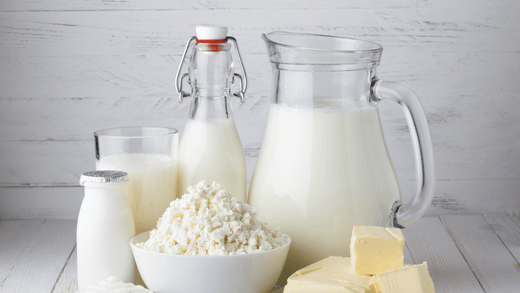
In Defence of Dairy: The unwritten stories of dairy and its contribution to human health.
Down at Hunter & Gather HQ, we believe you can use our products to heal your digestion and health. We produce ghee because it’s the easiest of the dairy products to digest and is a tasty, nutrient-dense food. We’re fans of high-welfare dairy and hope that one day, once you’ve healed, you’ll be able to enjoy it again as part of a tasty, nutritious diet consisting of animals and plants
Executive summary
- Humans have been ‘dairying’ since we first domesticated animals about 12,000 years ago.
- There are vast deposits of archaeological evidence for this and also within human DNA.
- Those people around the world who used dairy were shielded from famine, they survived more than those not using milk and passed on their genes.
- Lactose intolerance isn’t always a sign of non-milk-drinking populations.
- The Mongols conquered vast swathes of the globe using dairy as their primary ration.
- The Mongols were, and still are, lactose intolerant but consumed fermented milk products.
- Fermentation breaks down the problematic milk sugar lactose.
- Without cow’s milk, children are more likely to become protein-deficient and nutrient-deficient because, nowadays, over half of their diets are junk foods.
- Parents skipping nutritious animal (normally cow’s) milk risk malnourished children.
- Strict vegan diets have killed young children. Their parents rightfully went to jail.
- Vegan diets are missing vitamin B12 completely, it MUST be supplemented.
- Fortified soy milk is the only plant-based alternative that can compare to milk, but it is still less nutritious and bioavailable.
- Raw milk is more nutritious and bioavailable than pasteurised milk.
- We began pasteurising due to bacterial infection and poor hygiene know-how in urban dairies.
- Nowadays, farms are routinely tested for dangerous bacteria.
- Raw milk is not dangerous as long as certain husbandry practices are followed.
- Dairy is an excellent source of nutrients if you can tolerate it.
Introduction
Humans have been dairying for millennia. Archaeologists have piles of old milk vessels, some 9000 years old. Milk-drinking communities evolved a gene that allows them to break down milk sugar and prevent lactose intolerance. Other dairy-eating communities didn’t need to adapt; they used fermentation to do the breaking down for them. The Mongol horse soldiers conquered most of the known world whilst getting most of their calories and nutrients from fermented milk products.
Many people are allergic or intolerant to dairy, but there may be versions that they can eat safely. Dairy is a critically important source of nutrients, including B12 and proteins. Kids unable or forced to eat dairy-free are more likely to become nutrient-deficient and ill. Kids have died of malnutrition when forced to follow their parents’ vegan lifestyle. Fortified soy milk is the only dairy-free option that comes close to milk, but it still contains lower-quality proteins and less bioavailable micronutrients.
During the Industrial Revolution, urban dairy farms became pathologically unhygienic, spreading disease in the milk. Boiling it disarms the disease-causing bacteria, especially tuberculosis which killed one of every four people during the 18th and 19th centuries. Pasteurisation of milk does reduce vitamins and minerals and damages the most abundant protein within, making it less nutritious and harder to digest. Modern raw milk is not dangerous unless the farming practices are poor. One British herd, existing since 1957, has never had tuberculosis or Brucellosis, another dangerous pathogen. Ghee, produced by Hunter & Gather, is arguably the best dairy food to reintroduce into the diet, with your doctor’s approval obviously, because it only has trace amounts of lactose and casein, the most likely sugar and protein respectively to cause allergy.
“The Goose and the Golden Egg,” Anon.
In this old fable about greed and ungratefulness, the countryman killed his golden egg-laying goose to get his mitts on the entire gleaming clutch in one avian lottery win. Of course, he ended up with nothing. At some point in history, our ancestors learned that slaughtering a milk-producing animal was greedy and ungrateful because milk is reliable, versatile and brimming with nutrients and life-sustaining factors. Instead of killing and eating the animal for instant gratification, they took steps to protect it from predators and harsh weather. By feeding it human-inedible plants from the local environment and managing the female’s reproduction, early farmers could nurture their very own golden egg-laying ‘goose’.
Since its first use, milk has morphed into countless types of dairy products, providing dependable, predictable, and long-lasting security for many people.
How long have humans been drinking milk?
It doesn’t take a neolithic historian to tell us that one’s chances of milking a wild herbivore before animal domestication would not be as simple as joining the queue.
Unless, of course, it was recently dead being processed by the community’s ‘old people’ as has been recorded amongst Native Americans.[2] However, it’s safe to say that milk didn’t become a reliable part of the human diet until after the domestication of animals. This step towards civilisation occurred about 10,000 years ago in an area known as the Fertile Crescent, a part of today’s Eastern Mediterranean and Middle East. It’s likely that milking and making milk products, known as dairying, followed quickly.
And why wouldn’t it?
As the last major ice age ended about 12,900 to 11,700 years ago, dramatic climate change occurred, driving behavioural change.[3] Those creatures unable to adapt to their rapidly changing environments died out. Many of the megafauna (huge animals) that thrived in colder climates—on some of which humans depended—vanished, and with them a plentiful source of fat and protein. Eventually, milk from domesticated animals filled that gaping nutrient hole, offering survival to hardy communities in a brutal world.
In prehistory, anything that stood still long enough would have been milked.
To this day, cows, sheep, goats, camels, yaks, llamas, horses, water buffalo, buffalo, donkeys, reindeer and alpacas are milked. ‘Dairying’ is a better term than ‘milking’ because, although it all starts with that rhythmic repetitive squeezing, before refrigeration, milk begins to ferment. Whether we like it or not, within hours of sitting quietly in some warm dwelling somewhere, new dairy products begin forming inside milk. Adaptable to the last, humans saw not a waste product of sour milk, curds and whey but something that could be transformed to benefit them greatly.
Fermentation is a critical chapter in the human story of dairying as will become clear a bit later.
The earliest direct evidence of dairying can be found inside 9000-year-old pottery from the Northern Mediterranean, perhaps some of the first milk jugs.[4] In the same region, locals were making cheese 7,200 years ago.[5] Found in Bavaria, Germany, tragically lying alongside tiny skeletons, early baby bottles yielded 8000-year-old milk residues to scraping, peering scientists.[6] In the UK, molecular biologists have discovered milk proteins clinging to 6000-year-old adult teeth.[7]
These archaeological finds are not rare.
One paper details 7,000 examples of dairy fat residues ‘from more than 550 archaeological sites’ in Europe stretching back 9000 years.[8] Other indirect evidence provides still more proof for dairy’s importance in human survival. In fact, the story of milk in the human diet is written into our DNA.
Lactase Persistence
As toddlers stop toddling and drinking their mother’s milk, they begin to lose the ability to produce lactase.
Lactase is the enzyme that digests the milk sugar lactose. Lactose is found in all mammals' milk, including humans. In certain groups across the globe, a lactase persistence (LP) gene developed, coevolving with dairying after domestication.[9]
Rare until about 4000 years ago, the genetic trait became more common and spread throughout Europe and other pastoralist (livestock farmer) areas of the world—but notably, not all.[10] In the UK, the adaptation wasn’t ubiquitous until about 1000 BCE.[11] Researchers at the University College London (UCL) believe that milk consumption waxed and waned in certain areas over time based on the availability of other foods.[12] The survival of the fittest is a harsh reality from our past that dictates that only the genes from healthy people are passed on. This is called natural selection.[13]
When times were tough, people started drinking more milk.
Those with the LP gene and consistent access to the drink were provided with important nutrients to stay nourished and healthy. From these people, the milk-drinking women and their babies survived childbirth more often passing on their LP gene to the generation beneath them.[14] Those communities without historical access to milk and no LP gene were more vulnerable to famine and disease, making them much less likely to pass on their genes. This is what the UCL evolutionary biologists have painstakingly tracked with genetic data from more than 300,000 individuals.[15]
Without the LP genetic trait, drinking milk likely induces lactose intolerance.
In a malnourished person with lactose intolerance, the decision to suddenly start drinking milk for sustenance might lead to further loss of nutrients and disease. That decision could be fateful for those subsisting on the edge. According to the UCL scientists, these dangers prevented lactose intolerant people from passing on their genes anywhere near as often as the milk drinkers. In Northern and Western Europe, the prevalence of the LP gene is still between about 80-90%.[16] The gene is also common in African, Middle Eastern and southern Asian pastoral communities, yet it is scarcely found or entirely absent in other global regions. Approximately a third of the world has the LP gene. Put another way, most of the world doesn't.
Does this mean all those people in history without the gene couldn’t, shouldn’t or weren’t drinking milk or dairying? No.
Lactose intolerance
In the 13th century, Genghis Khan and his Mongol warriors swept across Asia conquering everything in their way. The Mongol Empire was the largest contiguous empire in history, stretching from Poland to the Sea of Japan and covering twelve million square miles. The endurance of these mounted warriors was unmatched. What were these men eating? Dairy in prodigious quantities. But there’s a problem.
95% of Mongolians, then as now, are technically lactose intolerant—they do not have the LP gene.[17]
Despite being genetically predisposed to the tedious condition, the Mongol warriors got most of their daily calories from dairy products. According to Zhao Hong, a contemporary Chinese Song Dynasty envoy, the daily milk from one mare was sufficient for three warriors for a day.[18] During the summer, sheep or mare’s milk was often the only ingredient in a warrior's rations. With careful planning, fresh milk was available for five months of the year, but that’s not how they drank it.
To varying degrees, the Mongols fermented all of their milk. Carrying it in leather bags on the flanks of a huffing horse would produce partially fermented milk by the end of a day's ride. Longer fermented mare’s milk was called airagh or kumiss (koumiss) which they chugged down as much as eight litres a day.[19] In fact, they consumed so much of this alcoholic drink it may have contributed to the empire’s downfall.[20]
After the five-month milking window had closed, the warriors carried a fermented dried milk paste to which they added water. According to another contemporary source, each man on an expedition would carry ten pounds of this milk paste.[21]
Traditional herders in modern Mongolia get about a third of their daily calories from dairy. They still milk seven types of mammals, making diverse cheeses, yoghurts, and other fermented milk products, including the airagh. But aren’t they all lactose intolerant?
Fermented milk products contain much less lactose.[22]
Raw milk is full of bacteria. These microbes begin breaking down (hydrolysing) lactose using lactase and other enzymes so they can ferment the milk sugar.[23] As the bacteria feed, they secrete lactic acid, which gives fermented milk and other products a tangy taste. Lactose-tolerant people with the LP gene hydrolyse lactose in the small intestine using lactase which they can produce just as if they were still weaning infants. This means less lactose in the large intestine.[24] Lactose-intolerant people don’t break it down in the small intestine, so as the small intestine comes before the large intestine (colon), lactose passes into the colon. Their microbes begin fermenting the milk just like in those warm Mongol leather bags. The result of this late-stage fermentation feeding frenzy is ‘Gas! Gas! Gas!’ and many other unpleasant symptoms of lactose intolerance.[25]
By fermenting their milk, the Mongols—and other dairying communities worldwide that never evolved the LP gene due to a lack of necessity—essentially got the raw milk bacteria to hydrolyse lactose for them. Without the lactose in the milk, lactose intolerance ceases to be a problem.
About 68% of the world is lactose intolerant,[26] but many of these people do not experience discomfort or side effects from eating dairy products. This may be because they’re eating fermented dairy or choosing products, like our ghee, that don’t have the milk sugar present and, therefore, don't trigger them. When reintroducing dairy into the diet, ghee is the best product to start with because it only contains trace amounts of lactose and the milk protein casein, which can also trigger reactions.
There are ways people can be allergic to dairy products that fermentation cannot help with, casein allergy for example.[27] Allergy differs from intolerance and is a medical issue because the symptoms can be critical. However, it is possible to heal from a dairy allergy, but because the mechanisms are unknown and there are no treatments other than avoidance, doctors call it ‘growing out of’.[28]
But try not to fret. If you’re having a mild reaction to the supermarket cow’s milk—always talk to your doctor if in doubt—there is something else you can try.
A1 vs A2 milk

Most cow’s milk sold in the UK contains a high proportion of A1 beta-casein, a type of milk protein. As A1 milk breaks down inside the body, it releases something called Beta-casomorphin-7 (BCM-7).[29] In some people, this bioactive peptide can cause symptoms including gut inflammation, pain and other unpleasant symptoms—some of which are similar to lactose intolerance symptoms.[30] But, there is some good news.

Some cows produce A2 milk.
BCM-7 does not get released as A2 milk is broken down. Therefore, some people cease getting symptoms of milk intolerance and can reintroduce it this way. Increasingly, you can find A2 milk in the supermarkets in the UK or look out for milk from the cows featured above. Always read the labels.
If you’re not allergic to all milk and can handle dairy of some kind, it’s a fantastically nutritious food to include in your diet. Adding a knob of ghee to your vegetables is delicious and increases the bioavailability of the micronutrients inside the plants. Also, we highly recommend cooking with ghee. Unlike butter, which burns very quickly, ghee has a high smoke point, making it perfect for frying. As you may know, many cooking fats today contain oils like linoleic acid that damage quickly creating a highly reactive mixture burdening your overtaxed antioxidant systems and driving poor health.[31]
You can read all about that in our blogs about seed oils.
Is Milk Nutritious?
Where would we be without dairy?
Walther et al. (2022).
So many people have benefitted hugely by drinking animal milk—normally cow’s milk— especially children. In the UK, ultra-processed foods (junk foods) account for between 47-69% of total calorie intake for kids.[33] Kids between two and five years old consume 61% of their calories from junk.[34]
That's more than the same age group in the US.[35]

Two-thirds of the food that awaits children at British schools is ultra-processed.[36] Junk foods seldom contain complete proteins, healthy fats, vitamins and minerals, which is partly what makes them junk food.
Milk contains all these nutrients—and more, as you’ll discover—in spades.
Unless parents are experts in nutrition and able to fill in the nutrient gaps, when kids are given alternative ‘milk’ in place of nutritious cow's milk, life-threatening deficiencies can result.[37] A toddler in the US suffered kwashiorkor (a grossly inflamed belly) due to serious protein deficiency when the parents replaced dairy milk, due to an allergy, with rice milk.[38] Rice milk has almost no protein. Another child had dairy replaced with unfortified soy milk, leaving him deficient in calcium and vitamin D.[39] It wasn’t until his legs bowed outwards that his doctors diagnosed the old Victorian disease of Rickets.
One paper entitled ‘Severe nutritional deficiencies in young infants with inappropriate plant milk consumption’ delved into more cases.[40] Nine children were left with various health issues ranging from protein deficiency, seizures due to low calcium levels, stunted growth, Rickets, severe skin problems, extreme fatigue due to low iron levels, and dangerously low levels of sodium in their blood. These events occurred because, over the past few decades, our perception of milk alternatives is that they are a ‘healthier option’. Therefore, the parents didn’t seek medical help until a diagnosable condition became visible. These are unfortunate mistakes, but they’re not criminally negligent.
Sadly, this space has been filled by a dangerous ideology.
In 2022, a misguided vegan mother starved her 18-month-year-old toddler to death by feeding him nothing but fruits and vegetables.[41] The year before, a 7-month-old baby suffered the same fate for the same ideology.[42] Soy milk and apple juice proved insufficient for a tiny 6-week-old baby who died of malnutrition whilst the parents insisted on sticking to their vegan beliefs about food.[43]
Weaning babies need their healthy mother’s milk—if the mother is deficient in nutrients, her milk will not contain them—or formula to ensure all their nutrient demands are met. An 11-month-old baby died after her parents decided she didn’t need any animal products, including milk, after watching a one-sided documentary about farming.[44]
Despite differences in the nutritional content of different animal milk, any of them would have prevented the suffering and death mentioned above, caused by ignorance and a militant adherence to an inadequate, modern dietary fad. This inadequate diet is vegan and would have been impossible long term without advances in modern science. This is why it didn’t exist outside of extreme religious sects practising asceticism—abstaining from something in pursuit of a spiritual goal—until just 79 years ago.
Rather than face Nazi bullets or assist in the second world war effort in any way, Donald Watson taught woodwork to children. With time on his hands, he coined the term ‘vegan’ from the first three and last two letters of the word vegetarian and founded the vegan society in 1944. As a conscientious objector, he was appalled by the thought of causing death or suffering to humans or animals and naively spent his life trying to extract himself from nature. He refused to defend his country or eat animals and their products, including dairy, although how he survived before supplementation of the critical missing nutrients is a mystery. Perhaps he wasn’t as adherent to his diet as he wanted people to believe.
Fortunately for him, he didn’t have to wait for long. The 1940s saw the identification and isolation of many vitamins, including those lacking in plants but found in abundance in animal foods, including dairy products.[45] Watson only had to wait until the 1950s before vitamin B12 could be purchased as a supplement. Plants do not contain B12, but dairy products are rich sources of the vitamin. There are no examples of indigenous vegans anywhere or at any time in our history before the mid-20th century.
Vegetarians can nourish themselves easily by including dairy and eggs which cover the missing nutrients. When avoiding dairy for any reason, it’s important to account for the nutrient shortfall; as those poor kids mentioned earlier discovered in the worst way. This is simple when including other animal products, especially red meat, but for those following a vegan diet, it becomes impossible to manage without nutritional supplements.[46] Which is why Watson couldn’t have been a strict vegan. Let’s look at the differences between the most nutritious alternative ‘milk’ and cow's milk.
Protein in milk
Walther et al. (2022).
The only alternative milk that comes close to the protein amount in cow’s milk is soy milk. But the quality of the protein is superior in cow’s milk.

A team of scientists compared 27 alternative kinds of milk to two types of cow’s milk from local supermarkets in Switzerland. Their comment begins this section.[49]
A higher DIAAS score indicates that a food contains a greater proportion of the nine essential amino acids, the building blocks of proteins. In a biological sense, ‘essential’ means something that must be obtained in the diet because our bodies can’t synthesise it. A ‘complete protein’ is a food that contains all nine essential amino acids in sufficient quantity. If a certain food is rich in eight amino acids but deficient in one, it wouldn’t matter how much of that food you ate; you would still be protein deficient.
You would need to add food with enough of that missing amino acid, or you would become ill.
The DIAAS score is expressed as a percentage, with a score of 100 or more indicating that the protein source contains all the essential amino acids in the required proportions and is highly digestible. For children aged between 6 months to 3 years, cow’s milk scores 123%, and fortified soy milk scores 91.9%.[50]
From the nine essential amino acids, cow’s milk is richer in seven of them.[51]
Soy milk falls short in the essential amino acid methionine,[52] which plays a significant role in our DNA and is used by the body to build proteins. In 2021, a team of scientists examining the quality of soy proteins recommended the following, ‘...the authors indicate the necessity of enriching soybean products with complete protein to increase their nutritional value’.[53]
Micronutrients in milk
To give you an idea of how nutrient-dense cow’s milk is versus soy milk, take a look at the charts below.


Except for selenium, soy milk is so devoid of micronutrients that manufacturers have to fortify it by adding synthetic vitamins and minerals before it can even be mentioned in the same breath as cow’s milk. Note the vitamin K in soy milk is K1, which is not a bioavailable form. K2 is a bioavailable form of the fat-soluble vitamin and is found in, you guessed it, real milk.
On paper, soy milk contains more iron than cow’s milk, but as you may have guessed, there are problems. The type of iron found in soy milk is non-heme iron, a plant version of the iron found in animal products. Soy contains high levels of phytic acid, which directly blocks iron absorption,[55] meaning only 1-10% of non-heme iron is assimilated.[56]
You’ll notice vitamin D goes wanting in most milk.
In the US and Canada, vitamin D is added to milk. The truth is, there is some vitamin D in milk, but it depends on the breed of cow and whether it grazed outside under the sun.[57] Pasteurisation reduces the amount of vitamin D further, something we’ll discuss later.[58] So it seems not all milk is created equal or even permitted to reach its full potential due to farming practices, including keeping cows inside all day and not feeding them grass.
The nutritional content of milk also depends on exactly when it’s taken.
Colostrum
After giving birth, and for between two and five days afterwards, a mother produces a super concentrated form of milk known as colostrum.
The average colostrum yields are between 39 to 52 kg, depending on the breed. A baby cow drinks about 3.6 kg per day, leaving plenty of excess without risking the health of the calf.[59] The nutrient-dense liquid is designed by nature to give a baby mammal the best chance of survival. Cow’s colostrum is higher in proteins, fats, carbohydrates, B vitamins, vitamins A, C and E, as well as magnesium than milk at any other time.[60] But the health benefits don’t end there. It’s often hailed as an immune-boosting addition to the diet, either in its original guise or taken as a supplement in powder or pill form.[61]
Colostrum contains thirty times more lactoferrin than milk.[62]
Lactoferrin is an immune system protein with anti-inflammatory,[63] antiviral,[64] antibacterial[65] and antifungal[66] effects. Moreover, scientists have shown the anticancer mechanisms of lactoferrin—especially from cow’s milk—in humans. The immune-boosting protein can selectively target human cancer cells for destruction as well as strengthen our body’s cancer-fighting immune system cells.[67]
It’s almost as if nature has created a perfect mammal food, even across species.
Raw milk, a health panacea or a health hazard?
When and why did we start pasteurisation?
Dr. Robert Mond.
Cramming cows into small spaces creates a hygiene problem.
During the Industrial Revolution, British people flocked to cities and were loath to give up their habit of fresh milk in the mornings. Obligingly, entrepreneurs herded cows into every nook and cranny without thinking for a second that it may be unhygienic for beasts to stand in their excrement twenty-four hours a day, seven days a week. It wasn’t until the mid-19th century that freshly awakened people stopped throwing their ‘night soil’ from the nearest window. So it’s fair to say the ins and outs of hygiene—which may seem obvious to us in the 21st century–were lost on them.
Some people paid the ultimate price.
Cows in urban areas suffered from the bacterial condition tuberculosis (TB) at a much higher rate than their sisters in the countryside. In the late 19th century, slaughtered cows from London had a 90% infection rate compared to 0.53% in Birkenhead, a town small enough to get fresh milk delivered from rural farms.[69] Rates of TB in squalid inner cities were correspondingly much higher than in the countryside.[70]
In the UK, one in four deaths was caused by TB in the late 19th century.[71]
Of course, this wasn’t being driven exclusively by dairy cows but by ubiquitous poor hygiene. The process of boiling milk was critical in cities, but in the countryside ‘pasteurisation’ was late to evolve due to a lack of necessity.
Nowadays, almost all milk in the UK is pasteurised, allowing a multi-billion pound industry to develop. But, with our understanding of hygiene having come on leaps and bounds during the past century, do we need pasteurisation, or should we be drinking milk raw, as nature intended, if you like?
What are the pros and cons?
Nutrient deficiencies cause disease
Francis M. Pottenger, MD (1901-1967), had been a sickly child. But as an adult, he became obsessed with health. He mused that humans seemed capable of advancing their technologies but could not protect themselves and their children from chronic diseases. To get some answers, the dog-lover began diet experiments on cats. Between the years 1932 and 1942, Dr. Pottenger experimented on 900 felines. After an initial experiment demonstrated an appalling range of diseases and dysfunctions that could be caused by nutrient deficiencies, Pottenger
A Sweet Deception: The Bitter Truth About Added Sugars
‘Healthy’ Whole Grains Are a Lie