There is plenty of language around collagen: grass-fed, hydrolysed, pure, Type I and Type III. We believe every one of those words should be accurate, specific and capable of being backed up.
Our Grass-Fed Collagen is made from one ingredient: hydrolysed bovine collagen peptides, responsibly sourced from grazing, pasture-raised European herds. It is pure, unflavoured and independently tested, with the results published through Light Labs.
That reflects the standard we hold ourselves to. We want you to know what is inside, where it comes from, why we chose it and how we verify the finished product.
What is grass-fed bovine collagen?
Bovine means that the collagen comes from cattle. Grass-fed describes how those cattle were raised and fed, while collagen peptides describe the finished form of the protein.
Collagen is the most abundant protein in the human body, forming part of the structure behind skin, bones, tendons and other connective tissues. Different collagen types are found throughout the body and perform slightly different structural roles.
Bovine collagen naturally provides Type I and Type III collagen. Type I is found abundantly in skin, bone and connective tissue, while Type III is commonly found alongside it in skin, muscles, organs and blood vessels. This breadth is why Grass-Fed Collagen is the everyday all-rounder of our collagen range.
The word hydrolysed means that the collagen has been broken down into smaller peptides. This creates a fine powder that dissolves easily into coffee, tea, smoothies and food without changing their taste.
Why does the source of collagen matter?
All collagen comes from somewhere. Bovine collagen comes from cattle, marine collagen comes from fish, and porcine collagen comes from pigs. We believe the animal source should be clearly stated rather than left for the customer to work out.
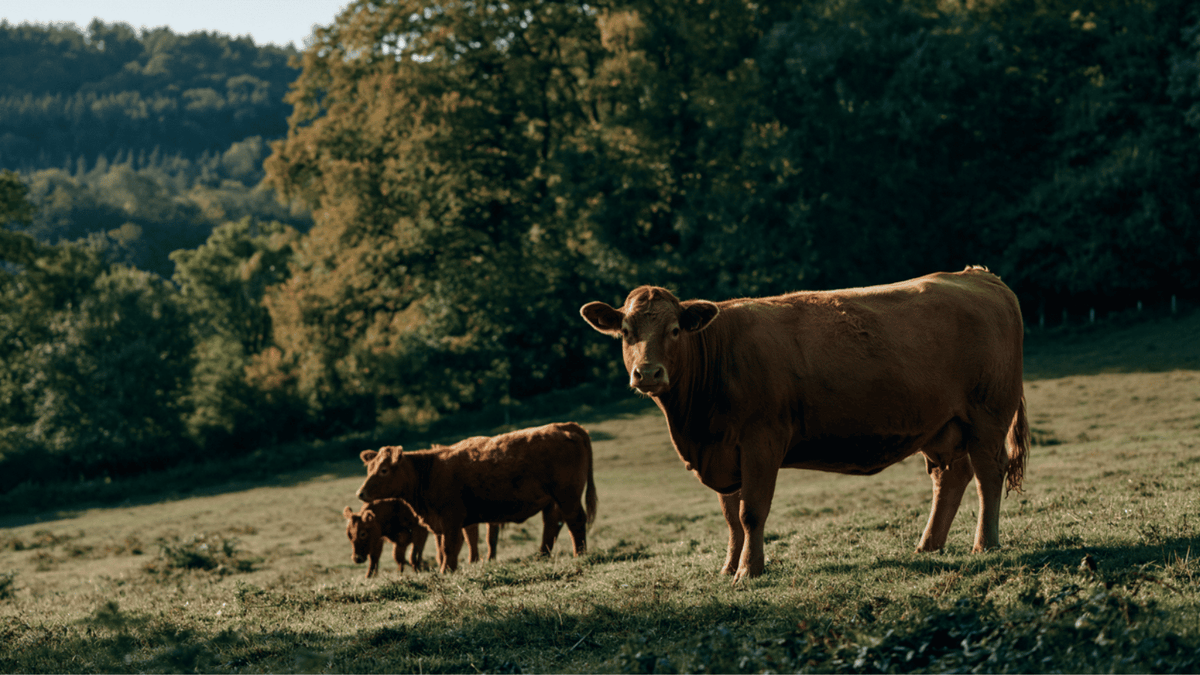
Our Grass-Fed Collagen is responsibly sourced from grazing, pasture-raised European herds. We choose this source because quality begins long before an ingredient reaches its finished form. Where an animal comes from, how it was raised and the standards surrounding the raw material all matter.
Grass-fed is not a separate type of collagen, and we would not claim that the word alone makes a collagen powder more effective. Its importance lies in what it tells you about provenance and the standard behind the ingredient.
We say bovine because the collagen comes from cattle. We say European because that is where the herds are raised. We say grass-fed and pasture-raised because those are the sourcing standards we have chosen. Clear language matters, but only when it accurately describes the product behind it.
A modern return to nose-to-tail nourishment
Collagen is naturally concentrated in parts of the animal that many modern diets now use less often, including skin and connective tissue.
Our ancestors generally made fuller use of every animal available to them, eating slow-cooked meat, skin, broths and collagen-rich connective tissue alongside more familiar cuts. This naturally provided a wider variety of proteins and amino acids.
Using collagen-rich material from cattle gives more of the animal a nutritional purpose. It reflects a nose-to-tail principle that has shaped Hunter & Gather from the beginning: if an animal is raised for food, more of it should be valued.
This does not need to be dressed up as something more complicated. It is a practical, resourceful approach to nourishment, inspired by the way humans ate before familiar cuts of meat became the only parts many of us regularly consumed.
How does bovine collagen become a powder?
To make bovine collagen powder, collagen must first be separated from collagen-rich cattle material and broken down into a form that can be used conveniently in food and drink.
Production methods can vary, but collagen is generally extracted before being hydrolysed into smaller peptides, then filtered and dried into a fine powder. Hydrolysis changes the size of the collagen proteins, allowing the finished peptides to dissolve far more easily than collagen in its original form.
Processing is a necessary part of creating collagen peptides, but it should not become a place where clarity disappears. The finished Hunter & Gather powder contains one listed ingredient: hydrolysed bovine collagen peptides.
There are no flavours competing for space on the label and no long formulation to decipher. What matters is the quality of that single ingredient, which is why we independently test the finished product rather than relying on its source alone.
Why do we use Light Labs?
Careful sourcing is where quality begins. Independent testing helps us verify where it ends.
Light Labs is an independent software platform specialising in product purity and nutritional integrity. It supports credible third-party testing and turns the results into clear, reliable information that can be reviewed and published.
We use Light Labs because we do not believe customers should have to accept a purity or quality statement on trust alone. Testing gives us an independent way to check the finished product, including its purity, safety and nutritional accuracy.
That distinction matters. The ingredient comes with sourcing information from the supplier, but testing looks at what is actually present in the finished powder. It helps verify that the product meets the standards we set and that its nutritional composition reflects the information printed on the label.
Publishing the results matters too. Testing hidden in an internal document may help a brand check its products, but it does not give customers the same clarity. Light Labs allows the evidence behind our standards to be brought into view, so you can see that our quality statements are supported by more than our own assurances.
It also holds us accountable. Independent results help us monitor quality, identify anything that needs attention and continue improving the products we make. We are not marking our own work or asking you to rely on carefully chosen words. We are putting an additional, independent layer of verification behind them.
Sourcing and testing therefore answer two different questions:
- Sourcing explains where the collagen began: grass-fed, pasture-raised European cattle.
- Testing verifies the finished product: its purity, quality and nutritional integrity.
Neither replaces the other. Together, they give a more complete account of what is inside the pouch.
What is nutritionally inside Hunter & Gather Grass-Fed Collagen?
Each 5g serving provides:
- 4.5g protein
- 18 calories
- 0g fat
- 0g carbohydrates
- Type I and Type III collagen
- One ingredient
Our recommended daily intake is 10g, taken as two 5g servings. Across the day, this provides 9g of protein and 36 calories.
Collagen has a different amino acid profile from complete proteins such as beef protein, eggs or meat. It is particularly rich in glycine, proline and hydroxyproline, but it is not considered a complete protein because it does not provide all nine essential amino acids in sufficient amounts.
Collagen therefore has its own nutritional role. It should sit alongside the complete protein and variety found throughout your diet rather than replacing them.
What does transparency look like in practice?
Transparency should be more than a broad statement about a brand’s values. It should give you useful information you can act on.
For our Grass-Fed Collagen, that means:
- Clearly naming cattle as the animal source.
- Stating that the collagen comes from grass-fed, pasture-raised European herds.
- Explaining that it provides Type I and Type III collagen.
- Using one listed ingredient.
- Publishing the serving size and complete nutritional information.
- Independently testing the finished product.
- Publishing the testing results through Light Labs.
- Being clear about what each fact tells you without stretching it into something it cannot prove.
Taken together, these choices create a standard you can follow. You do not have to infer where the collagen comes from, guess what else has been added or rely on a general promise that the product is high quality.
We tell you what we know, verify what can be tested and avoid making claims that the evidence cannot support. That is what evidence-backed nutrition means to us.
Grass-fed collagen: frequently asked questions
What is bovine collagen made from?
Bovine collagen is derived from collagen-rich parts of cattle, including skin and connective tissue. The collagen is extracted and hydrolysed into smaller peptides before being filtered and dried into a fine powder.
Is grass-fed collagen more effective than other bovine collagen?
There is not currently strong comparative human research showing that collagen is more effective purely because the cattle were grass-fed. Grass-fed describes its source and farming approach. The collagen type, serving amount, processing and quality of the finished product also matter.
Why is third-party testing important for collagen?
Third-party testing provides independent information about the finished product’s purity, safety and nutritional accuracy. It means quality is assessed through testing rather than relying solely on sourcing statements or what a brand says about itself.
Is collagen a complete protein?
No. Collagen provides protein and is naturally rich in glycine, proline and hydroxyproline, but it does not contain all nine essential amino acids in sufficient quantities. It should sit alongside complete dietary protein sources rather than replace them.
Is grass-fed the same as organic?
No. Grass-fed and organic refer to different farming standards. A product should not be assumed to be organic simply because it comes from grass-fed cattle.
From pasture to pouch, a standard we can show
Quality is not created by putting the right words on a pouch. It is built through a series of choices that should stand up to scrutiny.
We choose collagen from grass-fed, pasture-raised European cattle. We make fuller use of collagen-rich parts of the animal. We keep the finished powder to one ingredient. We state exactly what it provides, then use independent testing to verify its purity and nutritional integrity.
That is the standard behind Hunter & Gather Grass-Fed Collagen: transparently sourced, independently tested and clearly explained, from its origins to the finished scoop.
Eat Better, Feel Better, Look Better: How Our Products Work Together